
_681x1080.jpg)
The relief carvings at the Apadana Palace of Darius the Great are among the oldest remnants of magnificent Iranian miniature paintings (Negargari). The art, however, continued during the Parthian period in the form of gypsum decorations and was revived during the Sassanian era, and with Mani, the painter prophet. Miniature painting also evolved with floral motifs and geometric decorations in the post-Islamic era and with the emergence of calligraphy. It took on a more religious appearance during the Seljuk period, used extensively in the tile work of religious buildings. During the Mongol Ilkhanate period, with the arrival of Chinese artists in Iran, Iranian miniature painting was greatly influenced by its counterpart in China. In the Timurid period, the great artist, Kamaleddin Behzad, formed a new style of miniature painting. His magnificent illustrations on "Shahnameh-e Baysonqori" are the results of this period. When Safavids changed the capital to Isfahan, they caused it to become the center of Iranian painting. With the help of prominent artists like Reza Abbasi and the support of the Safavid rulers, Iranian painting reached its highest level, adorning magnificent palaces like Ali Qapu and Chehel Sotoun. During the Qajar era, miniature painting was prevalent but was partly influenced by European art.
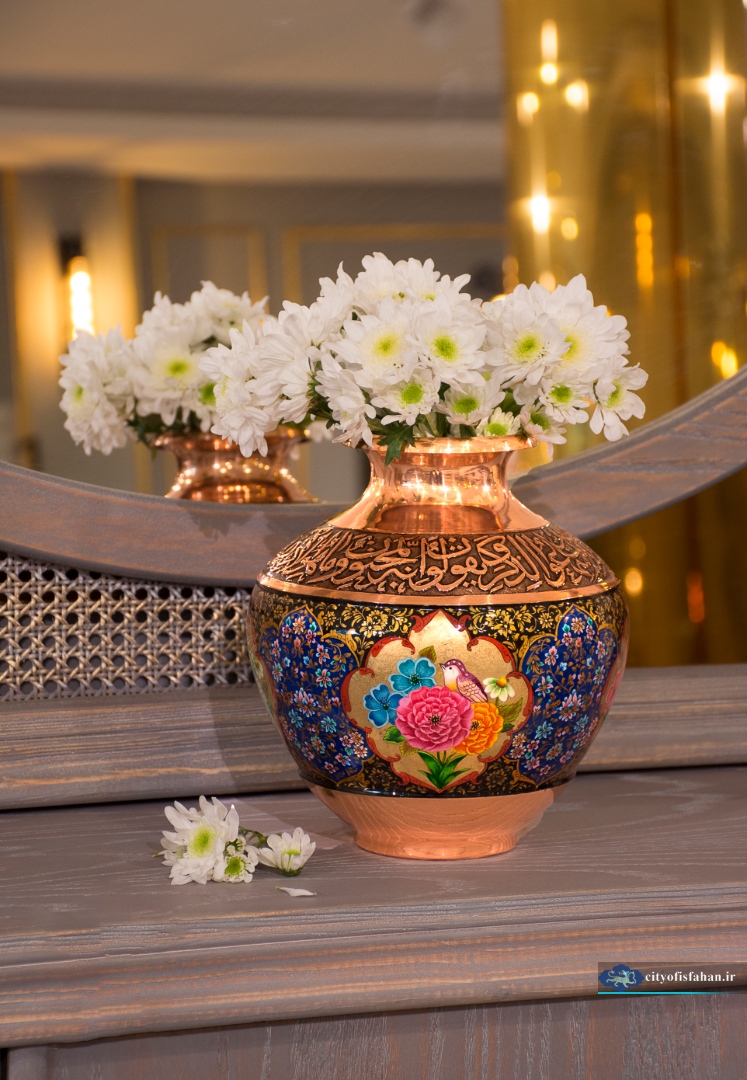
Today, Isfahan is still considered the center of Iranian painting, much like the Safavid period. People who visit Naqsh-e Jahan Square will enjoy the extraordinary works of Isfahan painters on marquetry boxes made of camel bone. Today, Isfahan artists recreate beautiful scenes of ancient Polo games and gatherings inspired by the works of the Safavid era.
Finally, natural elements and tools are used to enrich the quality of miniature paintings as much as possible. The paintbrush handle, for instance, is made of the spine of hedgehog, and its tip is of cat hair. Natural colors are usually used, and for the work surface, papers made of rice husk, and camel or cow shoulder bones are utilized. In extremely professional cases, elephant ivory is the best choice.