
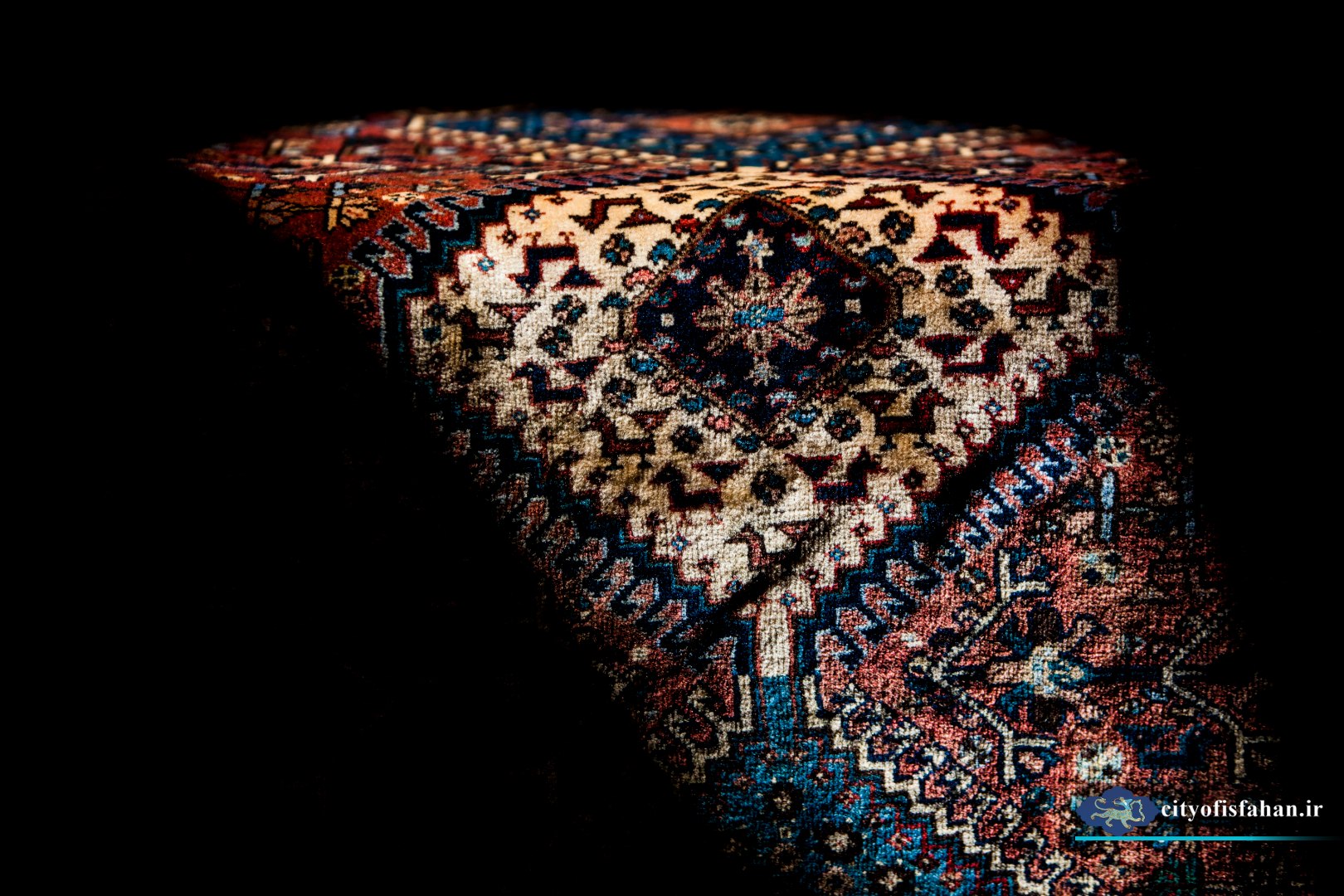
"Iranian carpet" is another creative masterpiece reflecting the artists' observations of the surrounding environment and their imagination. Carpets have always been considered essential in Iran; weaving them has been both an artistic and financial activity. The oldest carpet in the world is "Pazyryk," discovered in the Siberian region, Russia. Some, though, attribute it to Iranian handicrafts dating back to the Achaemenid era. However, the exact origin of Pazyryk, which dates back to the 4th and 5th centuries BCE, has yet to be determined with certainty.
During the Sassanian era, carpet weaving flourished significantly, especially in Tisfoon, the empire's capital. Muslim rulers did not contribute much to the industry, until Shah Abbas the Great established numerous weaving workshops in Isfahan, Kashan, and other cities, paving the way for further growth of this art. The produced carpets not only adorned palaces and other magnificent buildings, but were also exported to foreign countries.
An initial design is needed for weaving a carpet; the design for a quarter, half, or the entire work area is outlined on paper. Nomad carpet weavers, though, create them mentally, without a paper design. The designs used in Iranian carpets are intertwined with myths, stories, and folk beliefs. Carpets are woven on a frame called loom (Daar). Its primary materials are wool, cotton, or silk. Fiber dyeing is preferably done with plant materials such as pomegranate skin, walnut skin, saffron, indigo, and madder.