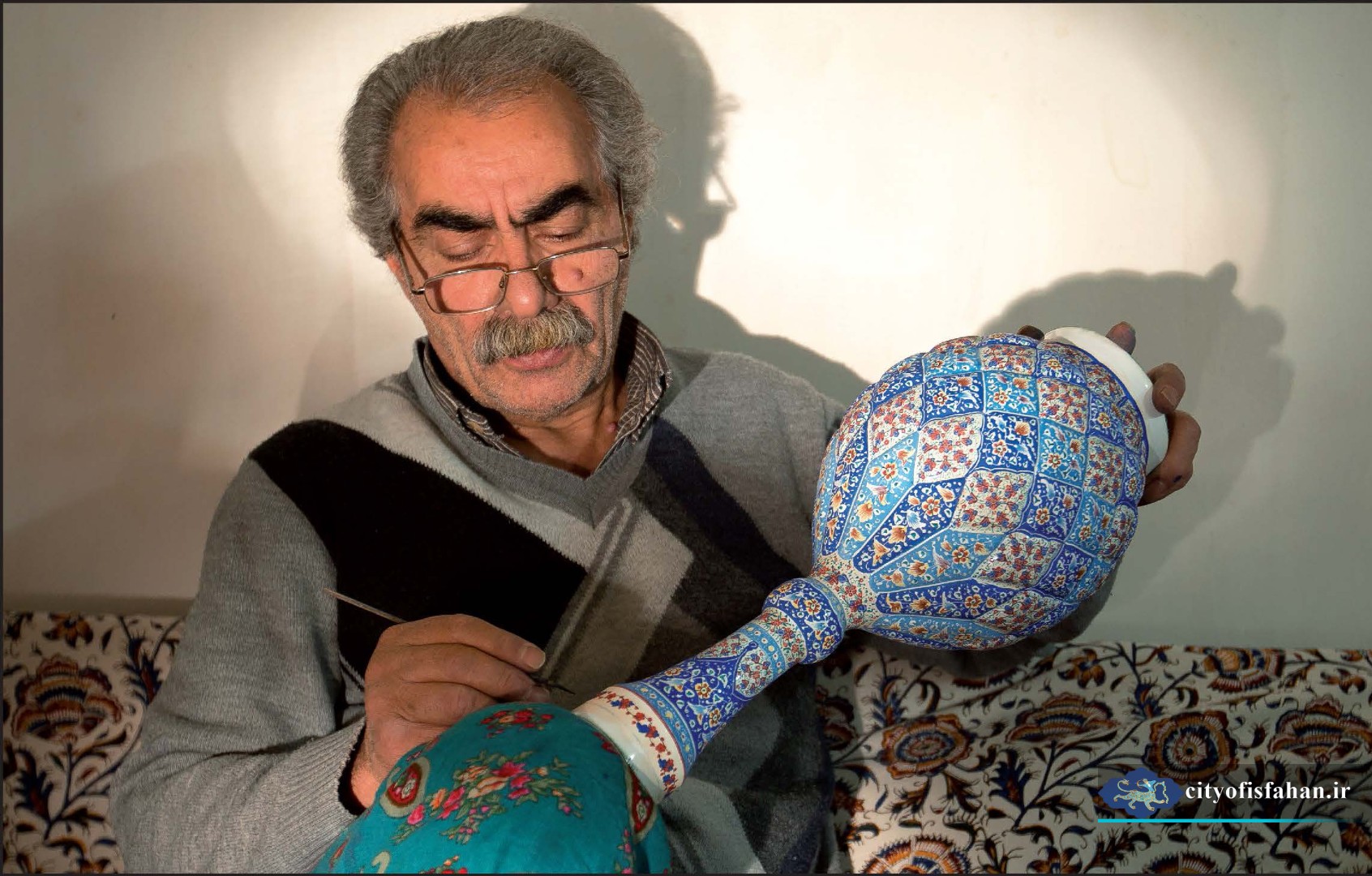

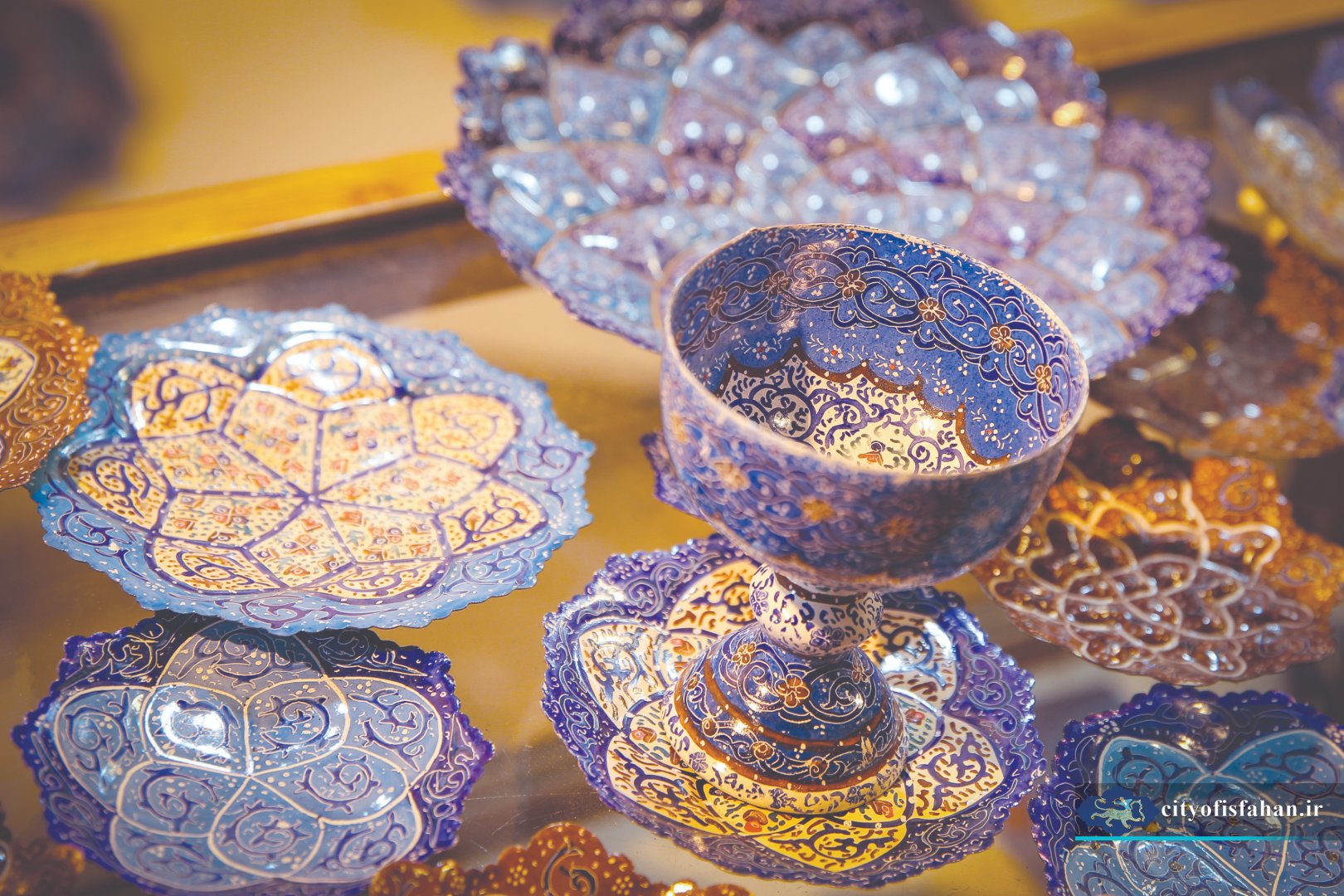
Enamel art (Mina-kari) is painting on metal surfaces covered with white enamel made of kaolin. Objects that undergo enamel work are typically made of copper, but brass may also be used. For jewelry and decorative items, though, gold and silver are used.
The exact origin of enamel work is unclear. The oldest discovered items of that kind are the six gold rings found in Cyprus, which date back to the 13th century BCE. Enamel work has a long history in Iran; items have been found that probably date back to the Achaemenid period. This art reached its pinnacle during the Seljuk era and continued to grow and flourish during the Safavid period.
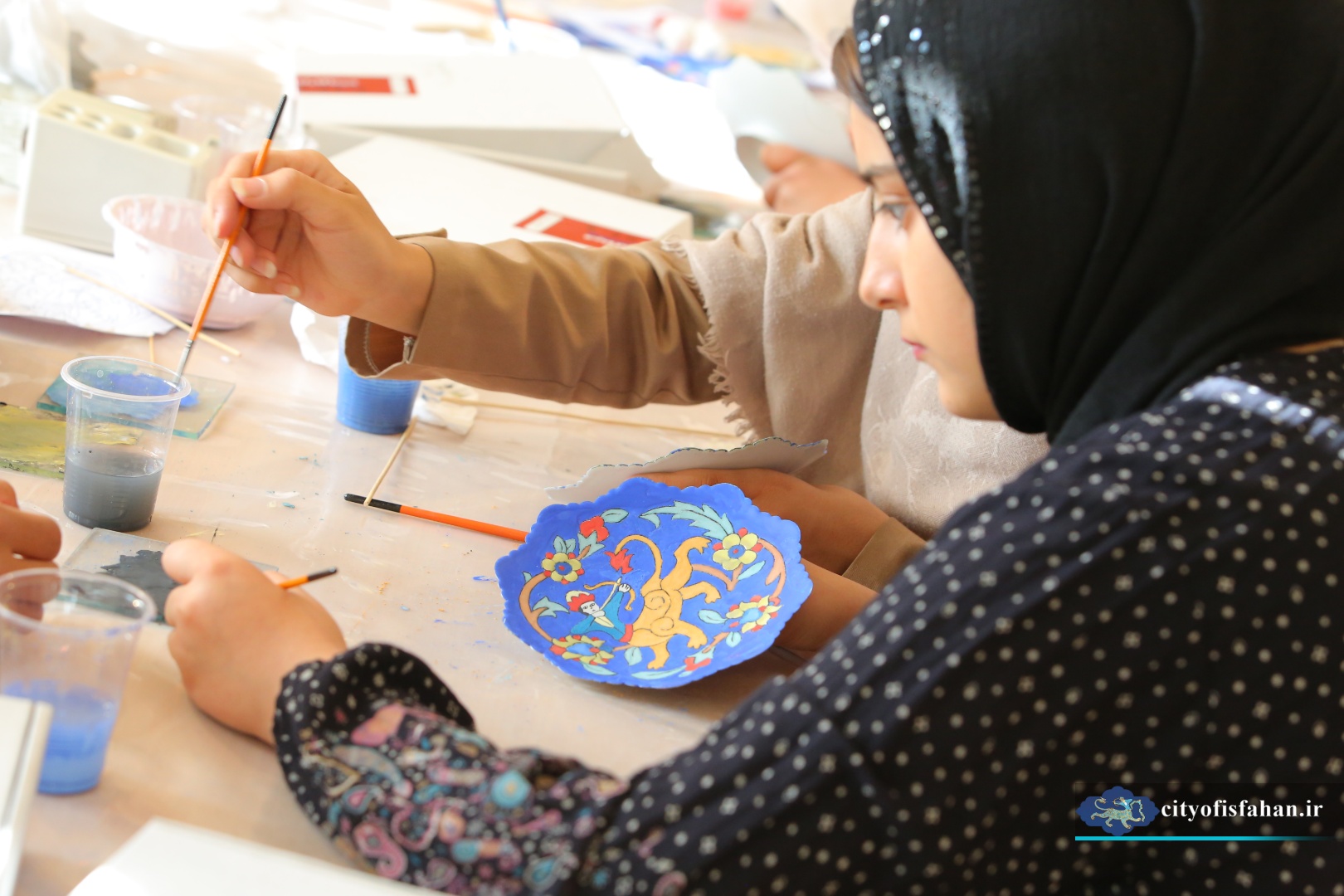
Enamel work is done using two methods: painting and cloisonné, but the technique commonly practiced in Isfahan today is painting. The process involves covering the object's surface with enamel and heating it to a very high degree to prepare it for painting. The enamellist then carefully and skillfully paints the desired patterns on the surface of the work. The enameled piece is fired again to fix the pattern and color.