
In 1953, a club called "Shahin" was established in Isfahan by the late Ostad Mahmoud Hariri, and in 1967, due to the closure of the Shahin Sports Club in Tehran, it was renamed as "Sepahan," the flag bearer of sports and club ownership in Isfahan. Early in 1993, this club went under the support of the Sepahan Cement Factory and continued its activity under the name of the Sepahan Cement Cultural and Sports Club.
In 2000, after an extensive period of negotiations by provincial authorities and the agreement of the Isfahan Mobarakeh Steel Complex, the Mobarakeh Steel Cultural and Sports Club, which had been operating as an organized club in Isfahan for many years, covered the Sepahan Football Team so that its cultural and sports activities would continue under the name of the Sepahan Mobarakeh Steel Cultural and Sports Club.
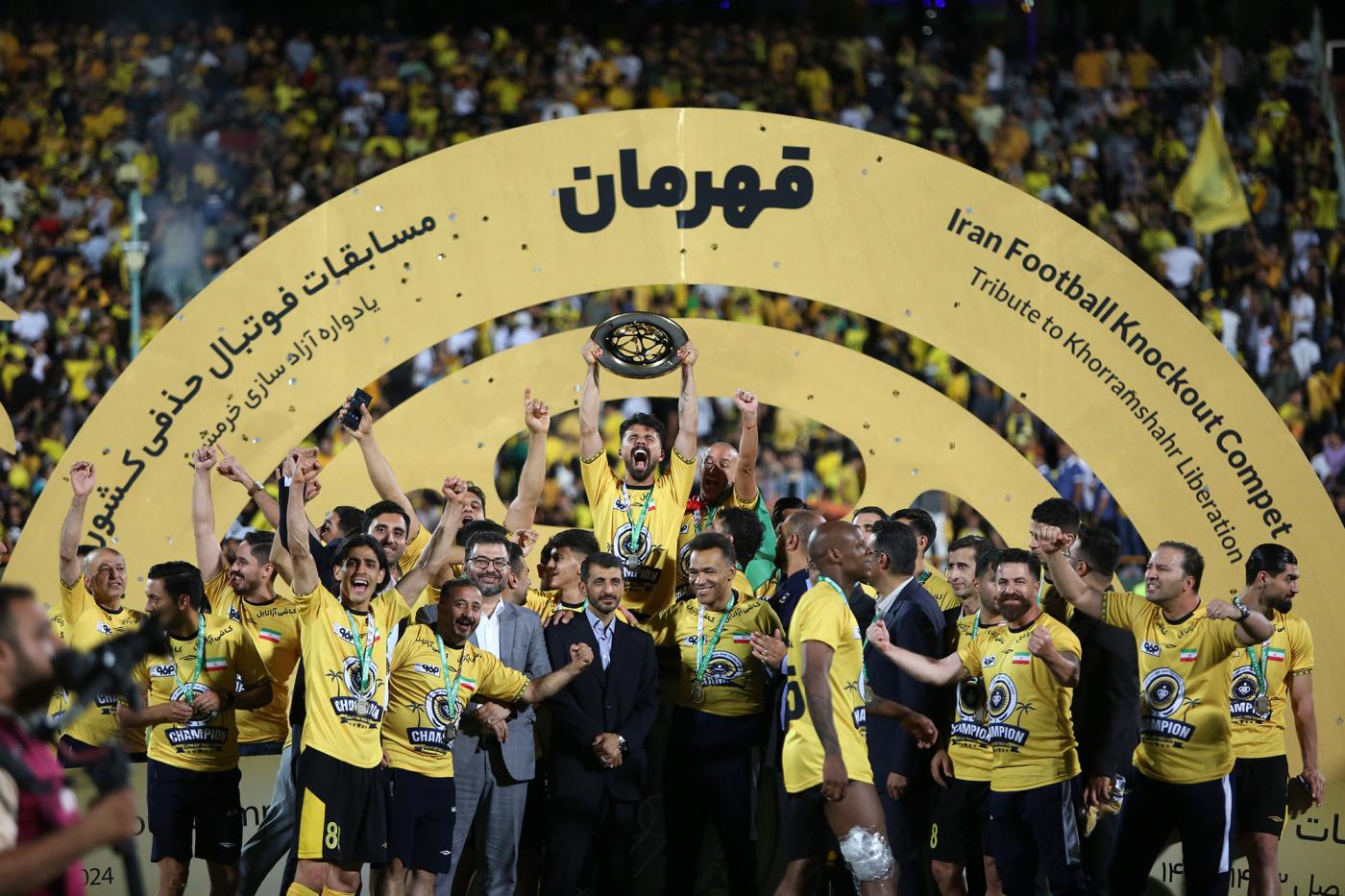
The Sepahan Mobarakeh Steel Club is today the golden hub of the country's sports and a great social capital of the people of Isfahan. It is also the largest sports club in the West Asia region with more than 2200 athletes in 70 sports teams and 27 fields. As the most popular field of this club, the Sepahan Football Team is the second most successful team of the Iranian League and the only Iranian team that qualified for the Club World Cup.
The Naqsh-e Jahan Stadium with a capacity of 75,000 spectators is the largest stadium built after the Islamic Revolution of Iran, and it belongs to the Sepahan Club.
The late Mahmoud Hariri, the late Mahmoud Yavari, the late Mohammad Barzmehri, Masoud Tabesh, Majid Basirat, Moharram Navidkia, Mahmoud Karimi, Hadi Aghili, and Ehsan Hajsafi can be mentioned among the legends of this club.
With more than 500 championships in various sports fields, Sepahan is now considered as the most brilliant sports club in Iran.
The Sepahan Football Academy, which is known as Iran's player factory, continuously covers 600 active members and annually introduces famous players to Iranian football. Moharram Navidkia, Ehsan Hajsafi, Sardar Azmoun, and Ali Karimi are just examples of stars trained by the Sepahan Academy.
The Sepahan Club Museum in the Naqsh-e Jahan Stadium is also a hub of sports tourism and the only club museum in Iran. This museum has different sections, including the hall of national team shirts, the hall of famous persons, the hall of championship cups, and the hall of gifts, and it hosts numerous tourists from all parts of the country and foreign guests as well, every day.