
Isfahan is a noteworthy economic hub of Iran, ranking among the most productive provinces in industry, mining, and agriculture. It has also been the pioneer of a knowledge-based economy at the national level. Isfahan Province hosts over 900 knowledge-based companies, almost 10% of the companies of this type in the country.
Isfahan Province contributes to 60% of the country's steel production, and hence, is ranked one in steel production in the country. Mobarakeh Steel Complex, located 75 kilometers southeast of Isfahan, is the largest steel producer in the Middle East and North Africa, and the largest in producing sponge iron worldwide.
Isfahan Steel Company is Iran's first and largest producer of construction steel and rails. In addition, Isfahan Refinery, a key player in the energy sector, supplies gasoline to 17 provinces across the country.
With over 10% of the country's production, Isfahan Province ranks first in per capita production in the cement industry.
Further, with 2300 textile units and the production of a vast array of products, including 75% of the country's machine-made carpets, Isfahan is the textile hub of Iran. It also accounts for 37% of the country's textile industry.
HESA Aircraft Manufacturing Company, Iran's most advanced aircraft production plant, is also located in Isfahan Province.
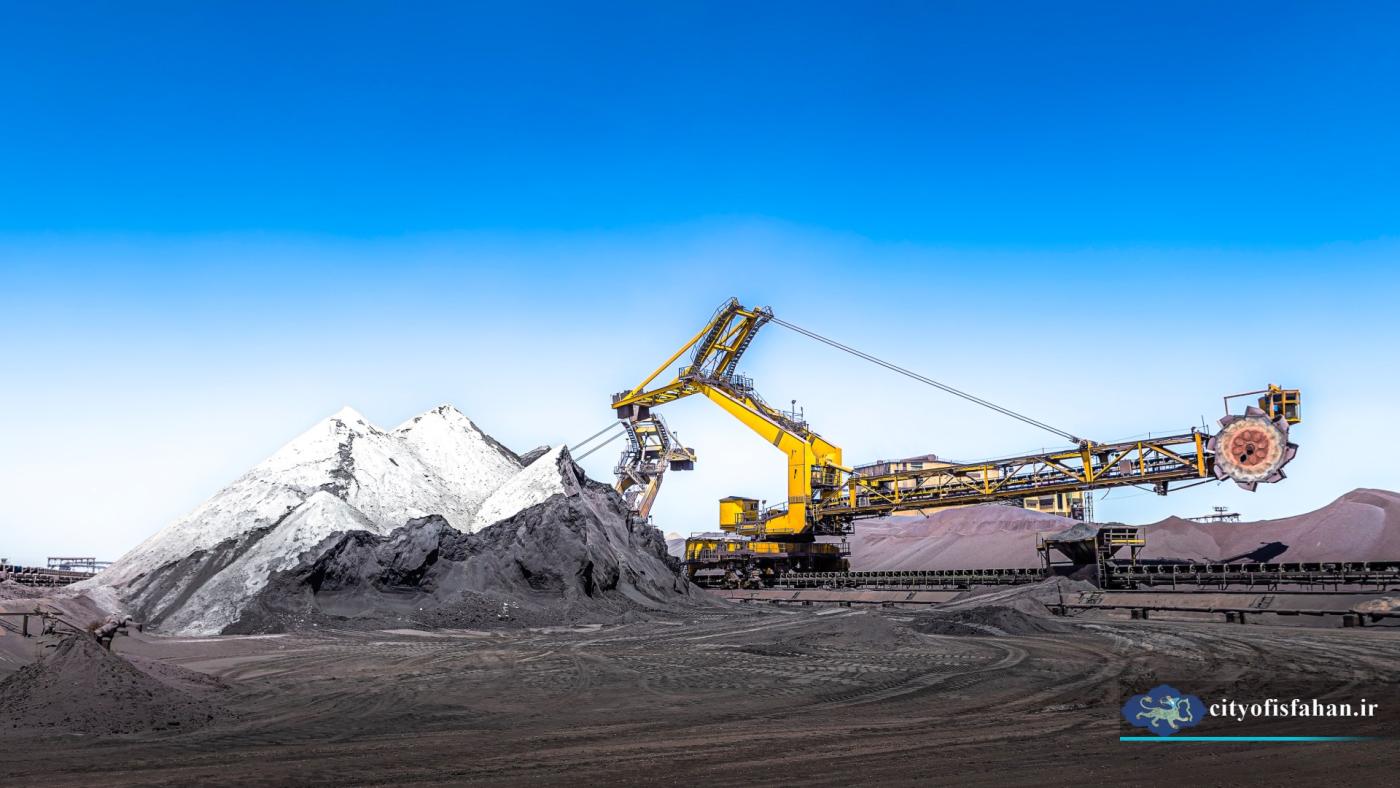
Moreover, Isfahan Province has more than forty types of minerals. It ranks first in active mines and lead and zinc production, and fifth in proven mineral reserves in the country. It also has the largest marble and travertine reserves in the country. The country's first gold mine and production plant are also located in this province. Similarly, over 400 decorative stone mines and almost 3000 stone-cutting plants have changed the province into the country's stone hub.
In agriculture and animal husbandry, too, Isfahan holds a remarkable position. It ranks first in milk, third in meat, and fourth in poultry production in the country. Additionally, Isfahan is the top producer of laying hens and ornamental fish. It also has a high capacity for producing medicinal plants such as roses, saffron, garlic, black cumin, and many others, some of which are exported to foreign countries.