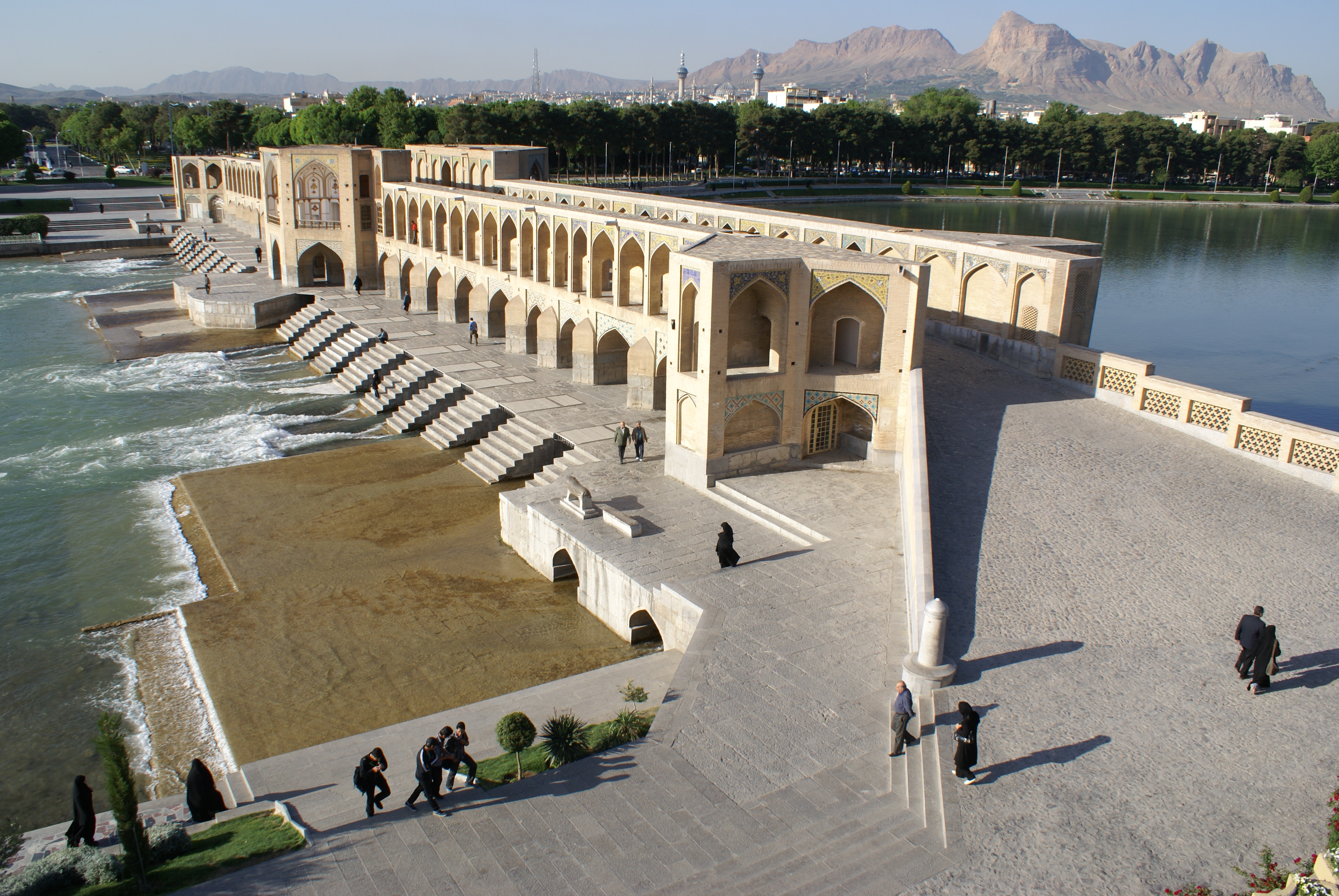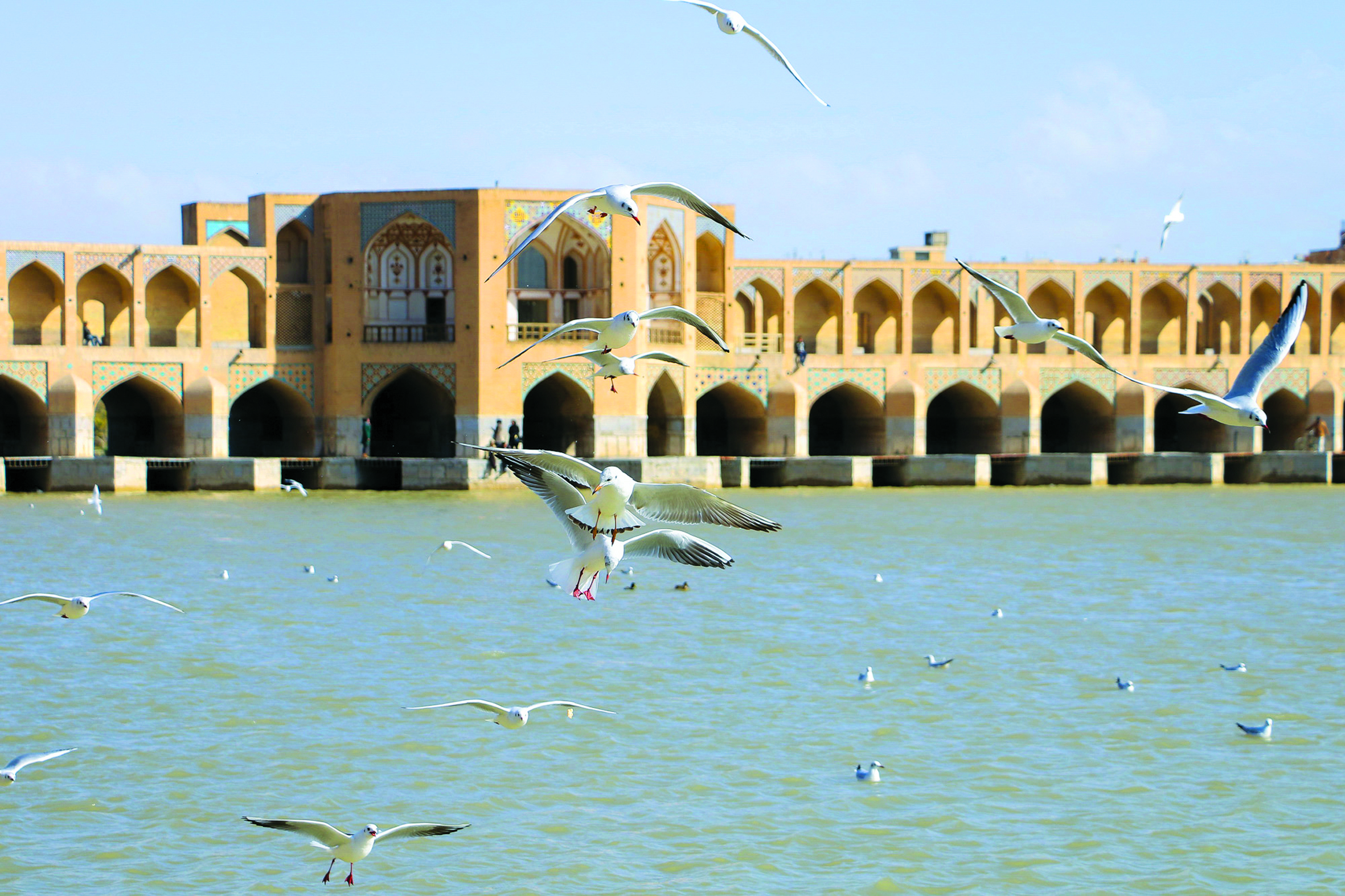

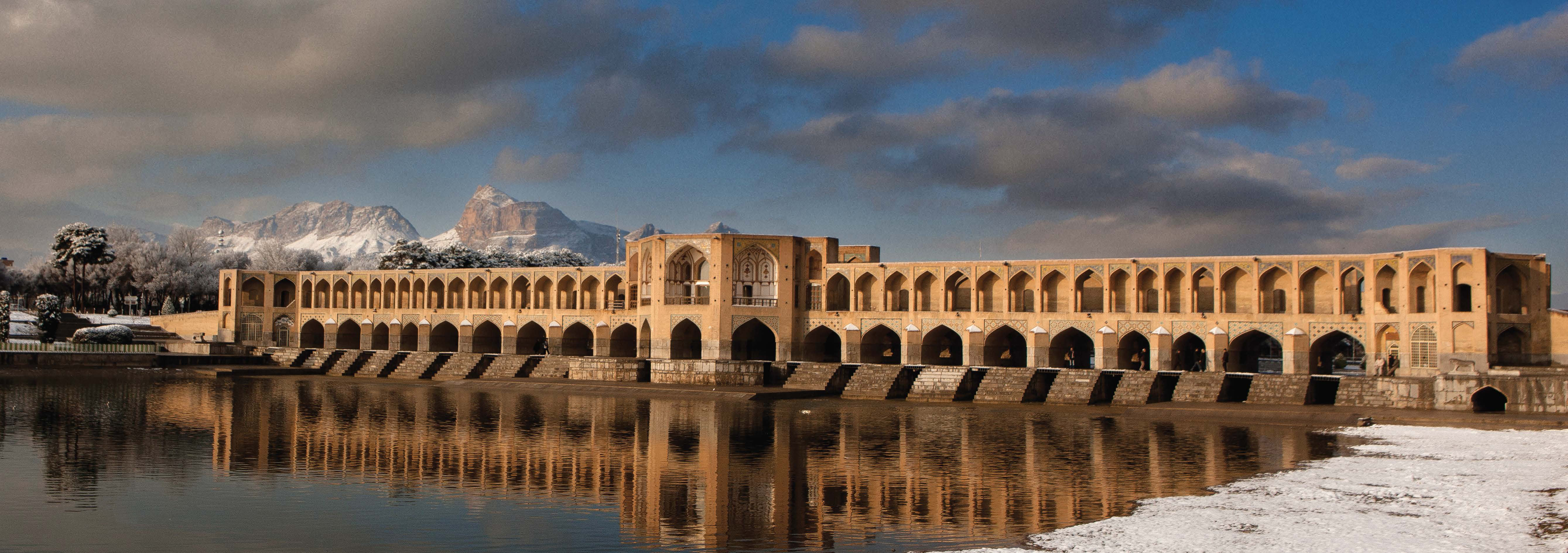
The initial foundation of the "Khaju Bridge" dates back to the late Timurid period; however, it was rebuilt in its current form by the order of Shah Abbas II in 1680. The bridge is adorned with tilework and paintings on its alcoves.
The original name of this beautiful bridge, as mentioned in Safavid sources, was "Pol-e Shahi"; the title "Khaju" was given to it in recent centuries because of its proximity to the Khaju Neighborhood.
In the middle of Khaju Bridge and on its eastern and western sides, there are pavilions and decorated rooms, known as "Biglar Beigi," which served as a temporary residence for the Safavid king and his family.
Khaju Bridge, about 133 meters long and 12 meters wide, is also known as "Pol-e Hasanabad," "Pol-e Shiraz," and "Pol-e Baba Rokn al-Din."