
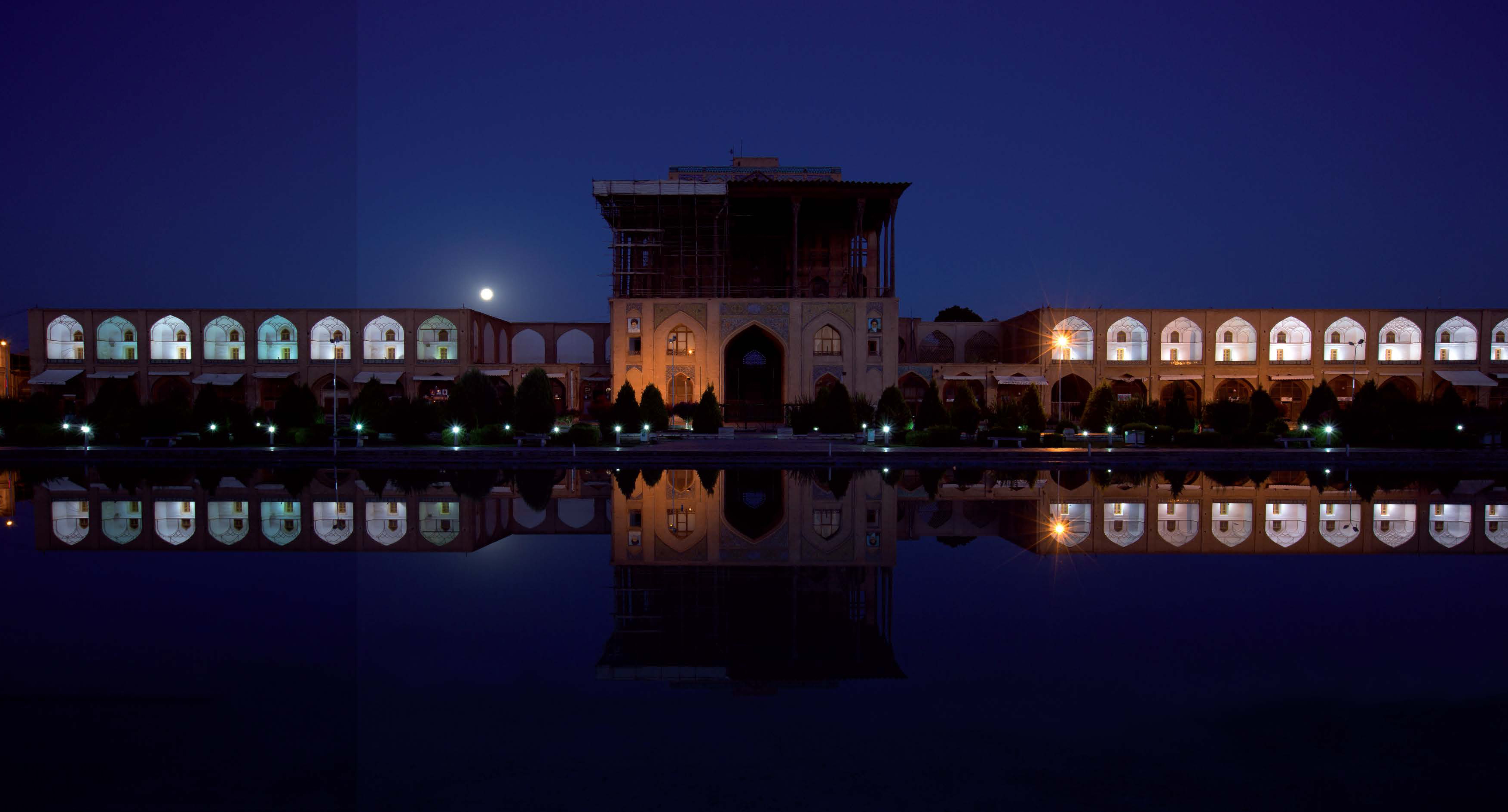
Ali Qapu Palace is located on the western side of Naqsh-e Jahan Square. It was also built by order of Shah Abbas I in the early eleventh century A.H.
Since it was the administrative center of the government and a place for welcoming ambassadors and noble people in the Safavid era, it was called "Dowlatkhaneh-e Mobarake."
It is believed that "Ali Qapu" is the equivalent of "Bab-e Ali," the governmental palace in the Ottoman Empire. Some, however, named that as "Aliqapu" or "Dar-e Ali (Imam Ali's gate)," as Shah Abbas ordered to bring and install one of the gates from the Imam Ali shrine at the entrance of this building.
The palace has six floors and is a masterpiece of the Safavid's stucco and painting instances.
During Shah Abbas II's reign, an 18-column hall facing Naqsh-e Jahan Square was added to the third floor, from where Safavid kings watched polo games, military parades, and festivities that occurred in this historical square.
One of the most intriguing parts of the Ali Qapu Palace is its sixth-floor hall, known as the "Otagh-e Sowt (Voice Chamber)," adorned with extraordinary stucco work in various shapes like cups, pitchers, and goblets.
Researchers believe that royal Safavid festivals took place in this hall because aside from its decorative and aesthetic aspects, the stucco works used here were specially designed to record and later play back the musical tones in a natural way.