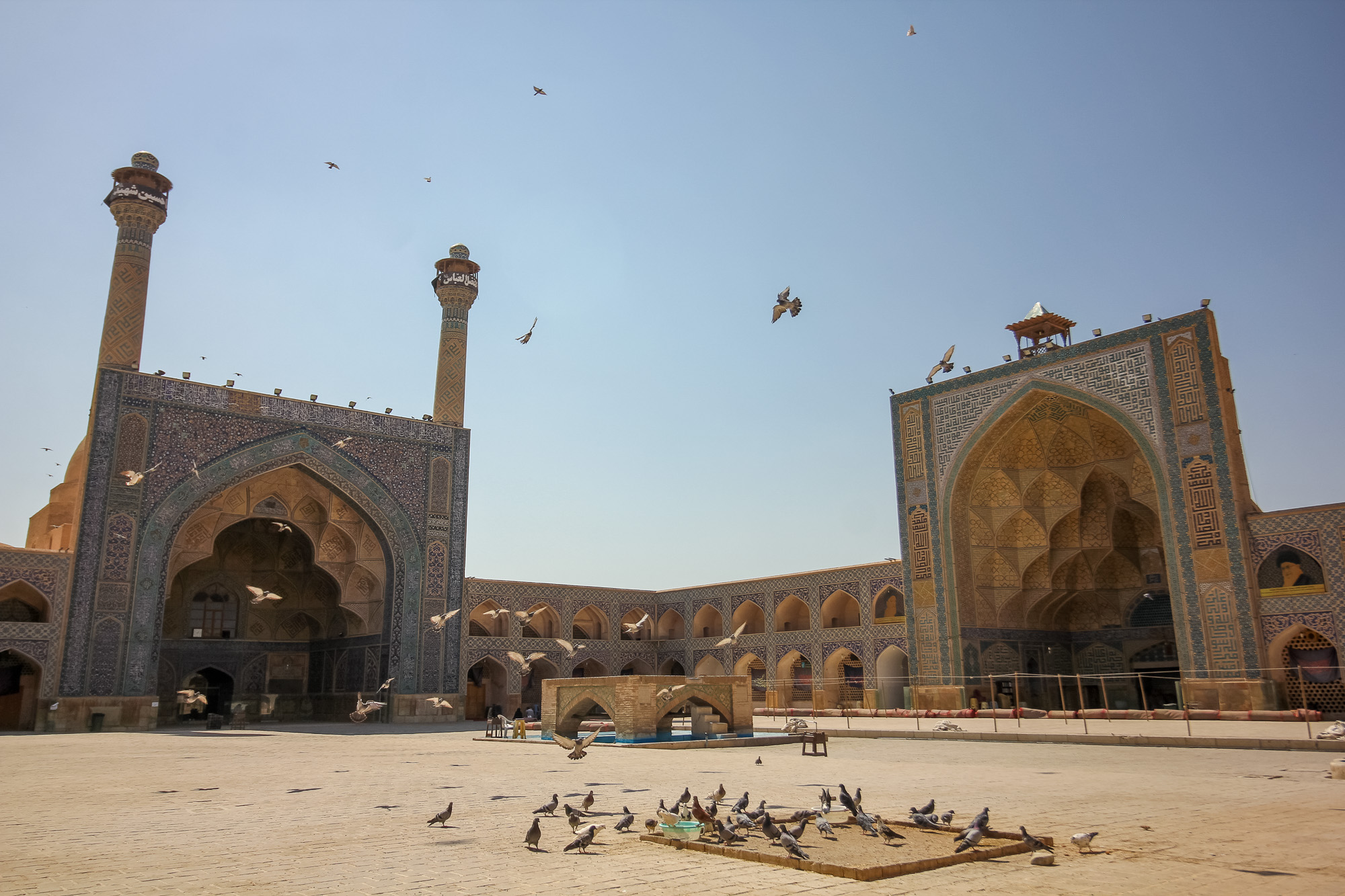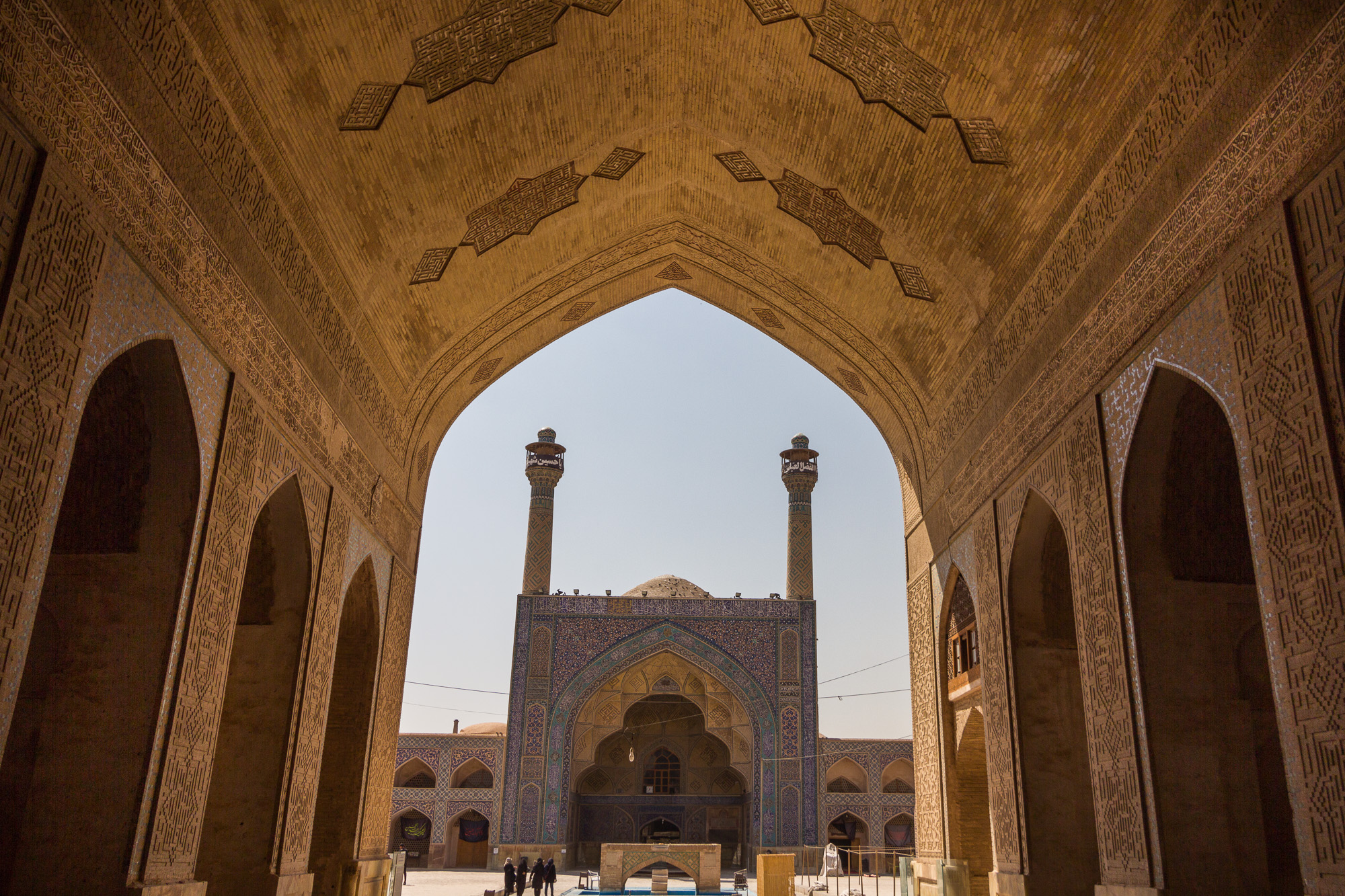

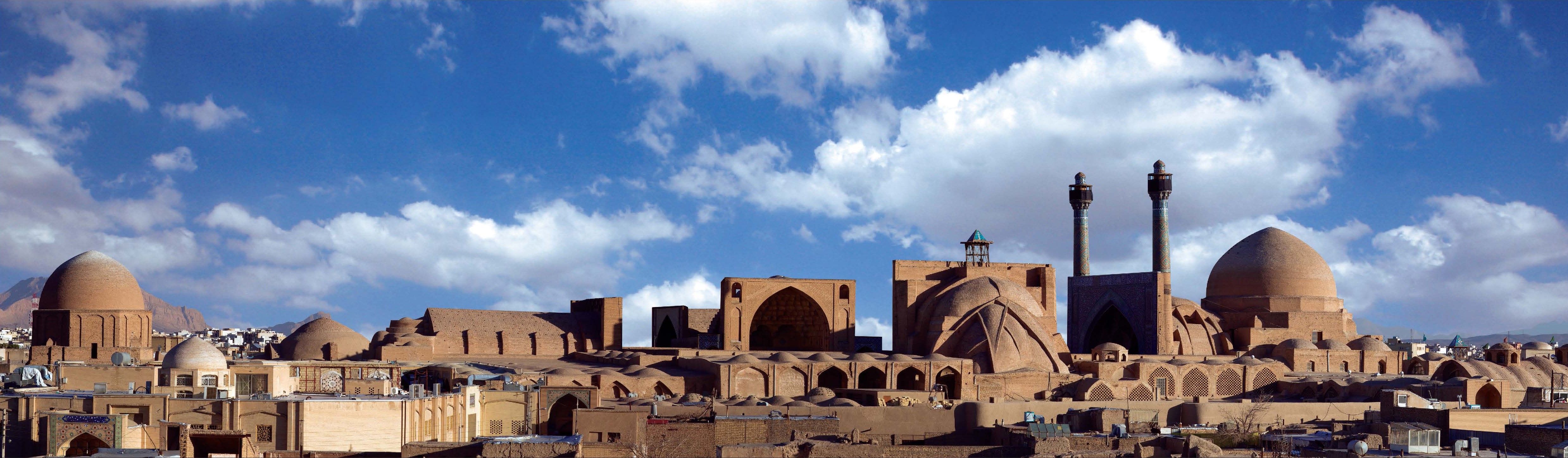
Jameh Mosque of Isfahan, also known as the "Masjed-e Atigh-e Isfahan" or the "Masjed-e Jomeh-e Isfahan," is one of the oldest historical monuments in the city. It is a museum of various architectural styles and decorative arts of post-Islamic Iran.
This masterpiece, registered in UNESCO's World Heritage List, showcases the artistic transformations of Iran's Islamic era over the past thousand years better than anywhere else.
This mosque, located between the two old neighborhoods of Isfahan, "Joubareh" and "Dardasht", has undergone several additions and embellishments throughout the history. The changes were made by the Dialameh and Seljuk dynasties and continued by the Ilkhanids and Safavids.
Some of the most famous sections of Jameh Mosque include "Gonbad-e Nizam al-Molk" attributed to "Khwaja Nizam al-Molk Tusi", the renowned minister of Sultan Malik Shah Seljuki, "Gonbad-e Taj al-Molk", attributed to "Abu al-Ghana'im Taj al-Molk," another minister of Malik Shah, also known as "Gonbad-e Khaki" because of its cream color.
"Mihrab-e Uljayto," which represents an unparalleled example of Iranian stucco art, and is attributed to Uljayto, the Ilkhanid ruler, is part of this mosque, too.
.jpg)