
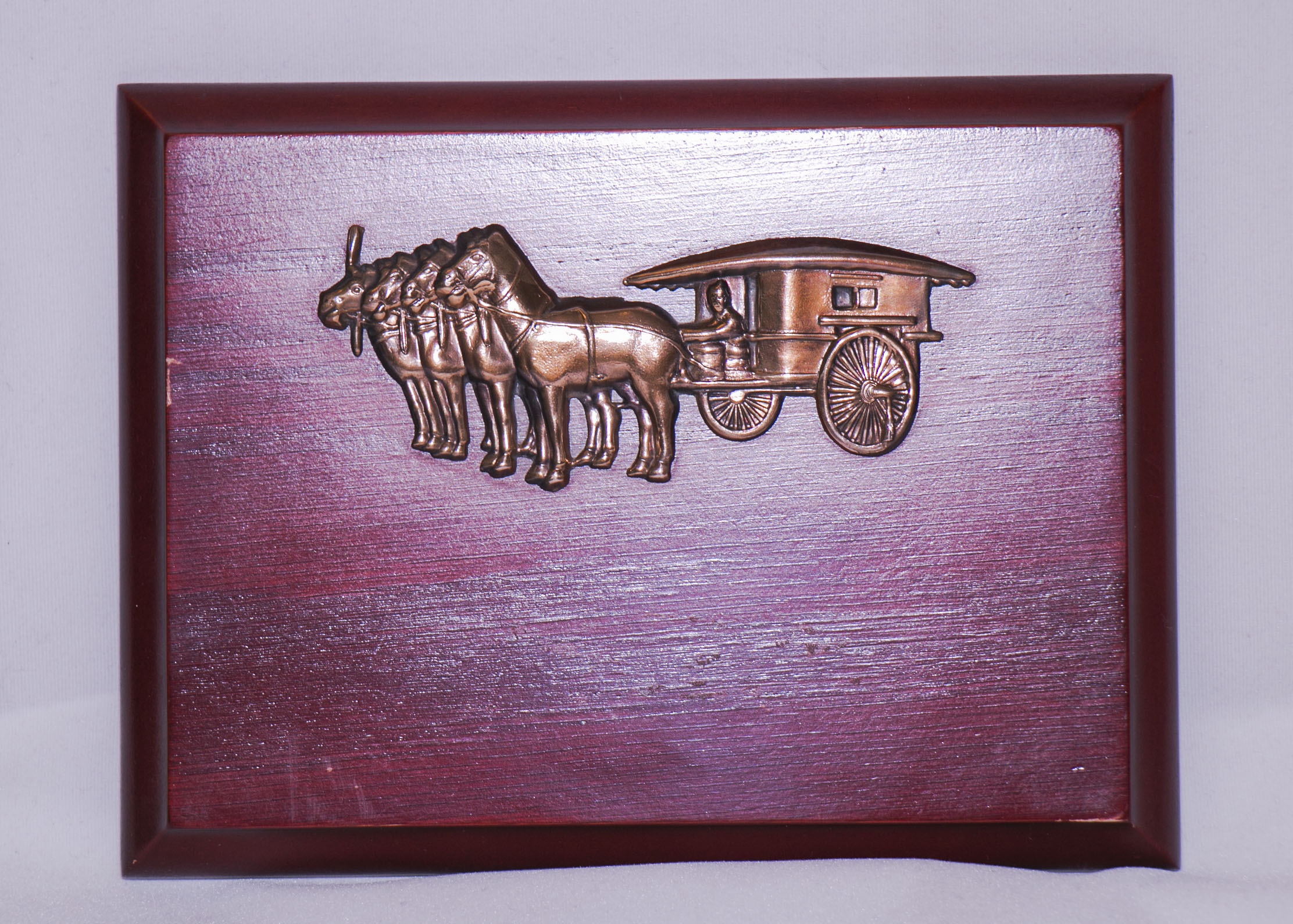
Wooden Plaque with Relief Carving of a Horse-Drawn Cart
The city of Isfahan in Iran and the city of Iași in Romania were officially twinned as sister cities on May 10, 1999.
In Romania, the art of woodcarving and woodworking has held an important place for centuries. According to scholarly research, “woodworking and woodcarving are among the oldest traditional Romanian crafts.” In Romanian folklore, symbolic motifs such as the sun, the horse, the rope pattern, and the “Tree of Life” frequently appear in wooden decorations.
The Maramureș region in northern Romania is one of the country’s most renowned centers of wooden architecture and woodcraft. Its wooden churches—eight of which are inscribed on the UNESCO World Heritage List—stand as testimony to the cultural significance of wood in Romania.
There is said to be a deep bond between the Romanian people and wood: it is not merely a raw material, but an integral part of daily life, architecture, folk art, and spirituality. This artistic tradition reflects a continuity from rural heritage to symbolic design, blending form and function. Examples include carved wooden gateways of village houses, tall wooden churches with slender towers, and interior wooden decorations featuring meaningful, traditional motifs.
Therefore, this relief-carved wooden plaque, presented as a gift from Romania, represents both the artistic character of this enduring cultural tradition and the symbolic connection between the two sister cities.
تابلوی چوبی با نقش برجسته ارابه چوبی
شهر اصفهان در ایران با شهر یاش در رومانی «شهر خواهر» شده است. بر اساس یک فهرست خواهرخواندگی، تاریخ این قرارداد ۱۰ می ۱۹۹۹ (۱۰ مه ۱۹۹۹) گزارش شده است.
در رومانی، هنرِ کار با چوب (wood-carving / woodwork) از دیرباز جایگاه مهمی داشته است:
در مقالهای علمی آمده است که «کار با چوب و حکاکی روی چوب از قدیمیترین هنرهای سنتی رومانیایی هستند. در سنت فولکلور رومانی، نمادهایی مانند خورشید، اسب، طناب و «درخت زندگی در تزئینات چوبی دیده میشوند. منطقه Maramureș در شمال رومانی یکی از مراکز شاخص معماری و کار چوب است؛ کلیسای چوبی این منطقه (شامل ۸ اثری که در فهرست میراث جهانی یونسکو هستند) گواه اهمیت چوب در فرهنگ رومانی است. همچنین نیز گفته میشود که رابطه نزدیکی میان مردم رومانی و چوب وجود دارد: چوب نهفقط یک ماده خام، بلکه بخشی از زندگی این هنر، گذر از دوران روستایی، طراحی نمادین و ترکیبی از فرم و عملکرد است؛ مثلاً خانههای روستایی با درگاه چوبی کندهکاریشده، کلیساهای چوبی بلند با برجهای باریک، و تزئینات داخلی چوبی با منبتهای نمادین؛ در نتیجه، تابلو چوبی نقشبرجستهای که از رومانی هدیه شده، میتواند هم خصیصه هنری این سنت را نشان دهد و هم نمادی از پیوند فرهنگی بین دو شهر در زمینههای روزمره، معماری، هنر عوام و معنویت است.