
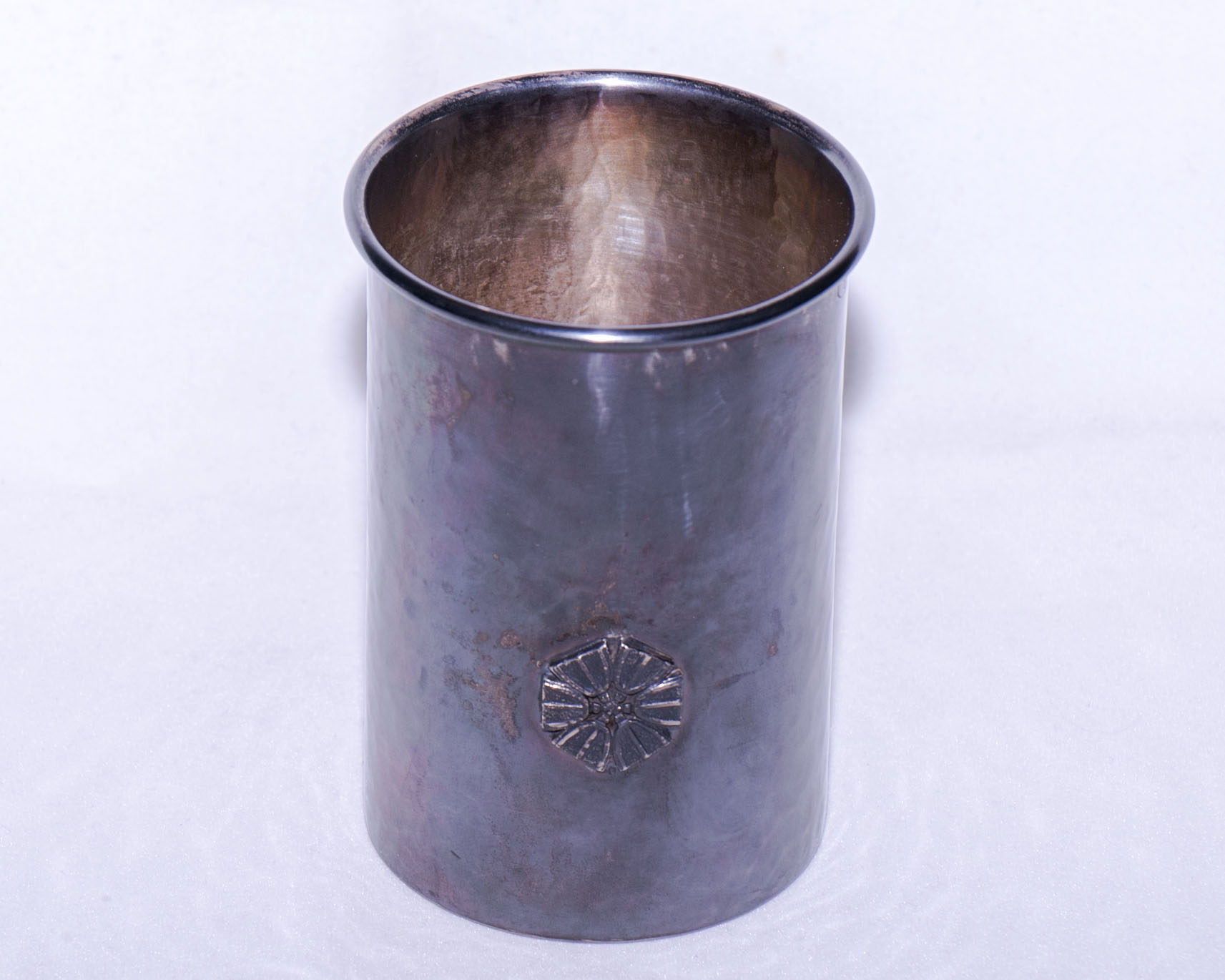
Whitened Copper Cup
The city of Isfahan is one of the cities that has a sister-city (“sister city” / “twin city”) agreement with the city of Barcelona in Spain. For example, the “Isfahan Sister Cities” website states that the agreement between Isfahan and Barcelona was registered on January 14, 2000.
Copper was one of the earliest metals used in the arts and handicrafts of Europe. Spain, too, has had a tradition of metalworking since the Middle Ages and the Renaissance.
In Spain, fields such as embroidery with metallic threads, decorative metalwork, and the use of copper and bronze in architectural elements, lamps, vessels, and decorative objects have long existed.
One of the characteristics of Spanish copper or bronze vessels is their warm copper patina, and sometimes a whitening of the surface due to oxidation or chemical processes (although the precise term “whitened” may also refer to surface whitening or silver-plating on copper).
Copper craftsmanship in Spain has traditionally been handmade, using techniques such as hammering, bending, and sometimes engraving or ornamentation.
In past centuries, major centers of metalworking in Spain included Andalusia, Catalonia, and regions in the south—areas where the influence of Islamic culture is also visible in metalworking techniques (for example, copper-bronze work with geometric or floral motifs).
Today, the Spanish art market still features handmade copper vessels, applied copper arts, and objects created for decoration, kitchens, or gifts. For example, a “Copper Cup” made of copper is sold on a Spanish copperware retail website for approximately 20 to 42 euros.
لیوان مسی سفید شده
شهر اصفهان یکی از شهرهایی است که با شهر بارسلونا در اسپانیا توافق خواهرخواندگی (“sister city” / “twin city”) دارد. به عنوان نمونه، وبسایت «Isfahan Sister Cities» ذکر کرده است: توافق بین اصفهان و بارسلونا در تاریخ ۱۴ ژانویه ۲۰۰۰ ثبت شده است.
مس یکی از فلزات اولیهای بود که در هنر و صنایع دستی اروپا کاربرد داشت. اسپانیا نیز از قرون میانه و عصر رنسانس دارای هنر فلزکاری بوده است.
در اسپانیا، رشتههای سرمهسازی، فلزکاری تزئینی، کاربرد مس و برنز در آثار معماری، چراغها، ظروف و کارهای دکوری وجود داشتهاند.
یکی از ویژگیهای ظروف مسی یا برنزی اسپانیا، غالباً پتینه با رنگ گرم مسی و گاهی سفید شدن سطح به علت اکسیداسیون یا فرآیند شیمیایی بوده است (اگرچه اصطلاح دقیق «سفید شده» ممکن است به معنی «سفید کاری» سطح یا آبکاری نقرهای روی مس باشد).
هنر مسکاری در اسپانیا معمولاً دستساز بوده و با فرایندهایی مانند چکشکاری، خمکاری، و گاهی حکاکی یا تزئین صورت میگرفته است.
در قرنهای گذشته، مراکز مهم فلزکاری در اسپانیا شامل آندلس، کاتالونیا و مناطق جنوبی بودند، جایی که تأثیرات فرهنگ اسلامی نیز در فنون فلزکاری دیده میشود (به عنوان مثال کار مسی-برنزی با تزئینات هندسی یا گیاهی).
امروزه نیز بازار هنر اسپانیا شامل ظروف مسی دستی، هنرهای کاربردی از مس، و اشیایی است که برای دکور، آشپزخانه یا هدایا ساخته میشوند. برای نمونه در وبسایت فروش ظروف مسی اسپانیا دیده میشود که یک «Copper Cup» از مس به قیمت حدود ۲۰ تا ۴۲ یورو عرضه شده است.