
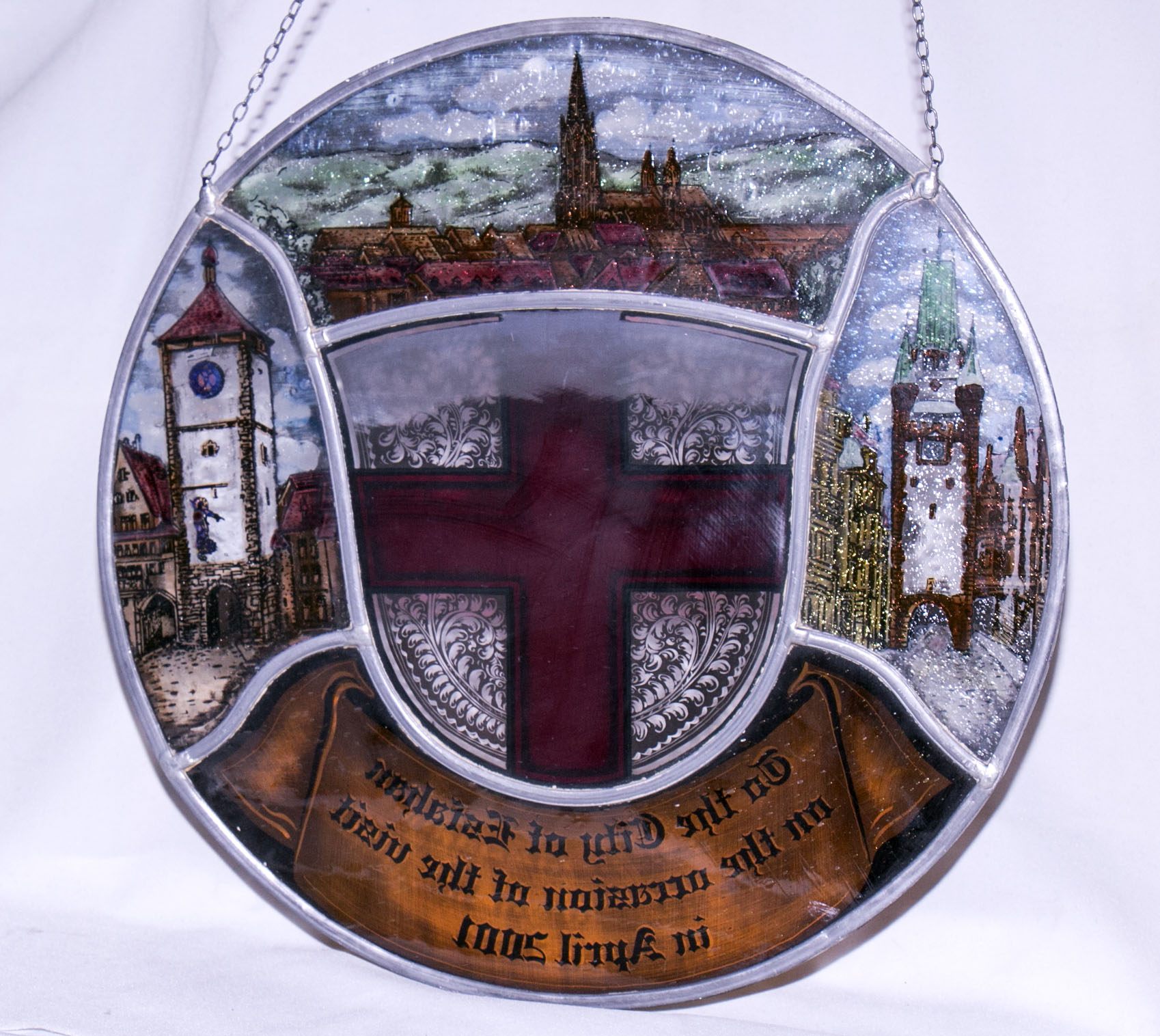
“ISFAHAN … and ST. PETERSBURG … became sister cities under an agreement signed … for Iran by Isfahan’s Mayor Mohammad Javadi and ST. PETERSBURG’s First Vice-Governor.”
This gift was likely presented within the framework of this sister-city agreement between Saint Petersburg and Isfahan.
It was gifted by a representative of the municipality or local government of Saint Petersburg (the “First Vice-Governor/Deputy Mayor of Saint Petersburg”) to the then-mayor of Isfahan, Mr. Mohammad-Ali Javadi.
The documented date of the agreement: around May 3, 1999 (13 Ordibehesht 1378 in the Persian calendar).
In the 18th century, Mikhail Lomonosov, near Saint Petersburg, conducted research in an effort to create vivid colored glass.
Production of decorative colored glass in Russia began in the 18th century, involving special chemical compositions for colored glass, glass painting techniques, and later, in the 19th–20th centuries, stained glass (vitrail) became widely used in churches and public buildings.
Some key features of this tradition:
Stained glass was well-established in Russian churches and religious buildings by the early decades of the 20th century.
Russian decorative glass art (russkoe steklo) has a diverse lineage encompassing decorative, semi-industrial, and artistic production, active from the late 19th to the 20th century.
لوح شفاف نقاشی شده
“ISFAHAN … and ST. PETERSBURG … became sister cities under an agreement signed … for Iran by Isfahan’s Mayor Mohammad Javadi and ST. PETERSBURG’s first Vice-Governor.”
این هدیه احتمالاً در چارچوب این قرارداد خواهرخواندگی بین سنپترزبورگ و اصفهان صورت گرفته است.
اهدا از سوی نمایندهٔ شهرداری یا دولت محلی سنپترزبورگ (نماینده «اول معاون فرماندار/شهرداری سنپترزبورگ») به شهردار وقت اصفهان، یعنی آقای محمدعلی جوادی.
تاریخ مستند قرارداد: حدود ۳ می ۱۹۹۹ (۱۳ اردیبهشت ۱۳۷۸).
در قرن ۱۸، Mikhail Lomonosov در نزدیکی سنپترزبورگ، در تلاش برای ایجاد رنگهای شیشهای روشن، پژوهش کرده است.
تولیدات شیشه تزئینی رنگی در روسیه از قرن ۱۸ به بعد وارد کار شد؛ با ترکیبهای شیمیایی خاص شیشه رنگی، گرافیک روی شیشه، و سپس در قرن ۱۹–۲۰ ویترای در کلیساها و ساختمانهای عام رواج یافت.
برخی ویژگیهای مهم این سنت:
ویترای در کلیساها و ساختمانهای مذهبی روسیه تا دهههای اول قرن ۲۰ جا افتاده بود.
هنر شیشه تزئینی روسی (russskoe steklo) شاخه متنوعی دارد که تولیدات تزئینی، شبهصنعتی و هنری را در بر میگیرد؛ از اواخر قرن ۱۹ تا ۲۰ فعال بوده است.