
The city of Isfahan is listed among sister cities: according to the Wikipedia page, Isfahan is recorded as a sister city of Kuwait City in the year 2000.
Kuwait and the Persian Gulf region have a strong tradition of metalwork, especially in silver and brass. This includes vessels, plates, plaques, gifts, and symbolic handicrafts.
Part of this tradition goes back to exchanges between leaders and officials in diplomatic or economic relations, where gifts serve as symbols of respect, friendship, or treaties.
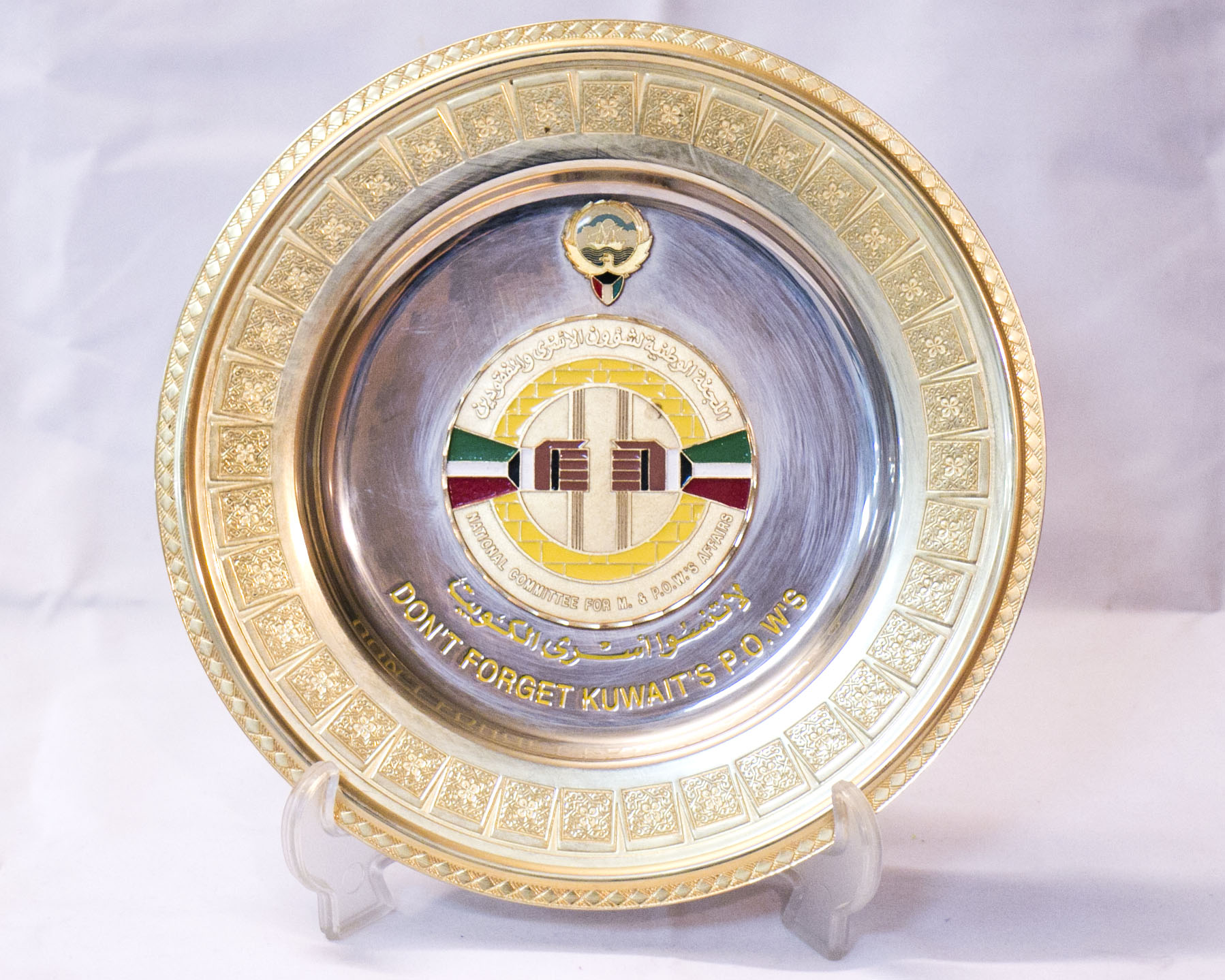
One of the common uses of these metal objects is as gifts in official ceremonies, contract signings, city sisterhood agreements, and formal visits. Such items usually feature symbols, national emblems, and inscriptions that convey a message of friendship.
In Kuwait, committees such as the one for “War Missing Persons” have used such objects for commemoration or recognition. These gifts can be designed as plaques, commemorative plates, or metal panels that combine artistic elements, national symbols, the colors of the Kuwaiti flag, and inscriptions in English or Arabic.
بشقاب یادبود فلزی
شهر اصفهان در فهرست شهرهای خواهرخوانده ذکر شده است: طبق صفحه ویکیپدیا شهر Isfahan (اصفهان) «خواهرخوانده» شهر Kuwait City (کویت-سیتی) در سال ۲۰۰۰ درج شده است.
کویت و منطقه خلیج فارس دارای سنت قوی در فلزکاری، به ویژه نقره و برنج، هستند. این شامل ظروف، صفحهها، لوحها، هدایا، و صنایع دستی نمادین میشود.
بخشی از این سنت به مبادلات میان سران و مقامات در روابط دیپلماتیک یا اقتصادی بازمیگردد: هدایا همچون نمادی از احترام، دوستی یا پیمان هستند.
یکی از کاربردهای متداول این ظروف فلزی، به عنوان هدایا در مراسم رسمی، امضای قراردادها، خواهرخواندگی شهرها و بازدیدهای رسمی است. چنین اشیایی معمولاً دارای نمادها، نشانههای ملی، و نوشتههایی هستند که پیام دوستی را منتقل میکنند.
در کویت، کمیتههایی مانند همان «مفقودین جنگی» با استفاده از چنین اشیائی برای یادبود یا تقدیر استفاده کردهاند. این هدایا قابلیت آن را دارند که به صورت لوح، بشقاب یادبود، یا صفحههای فلزی طراحی شوند که ترکیبی از هنر، نماد ملی، رنگ پرچم کویت، و متن انگلیسی یا عربی دارند.