
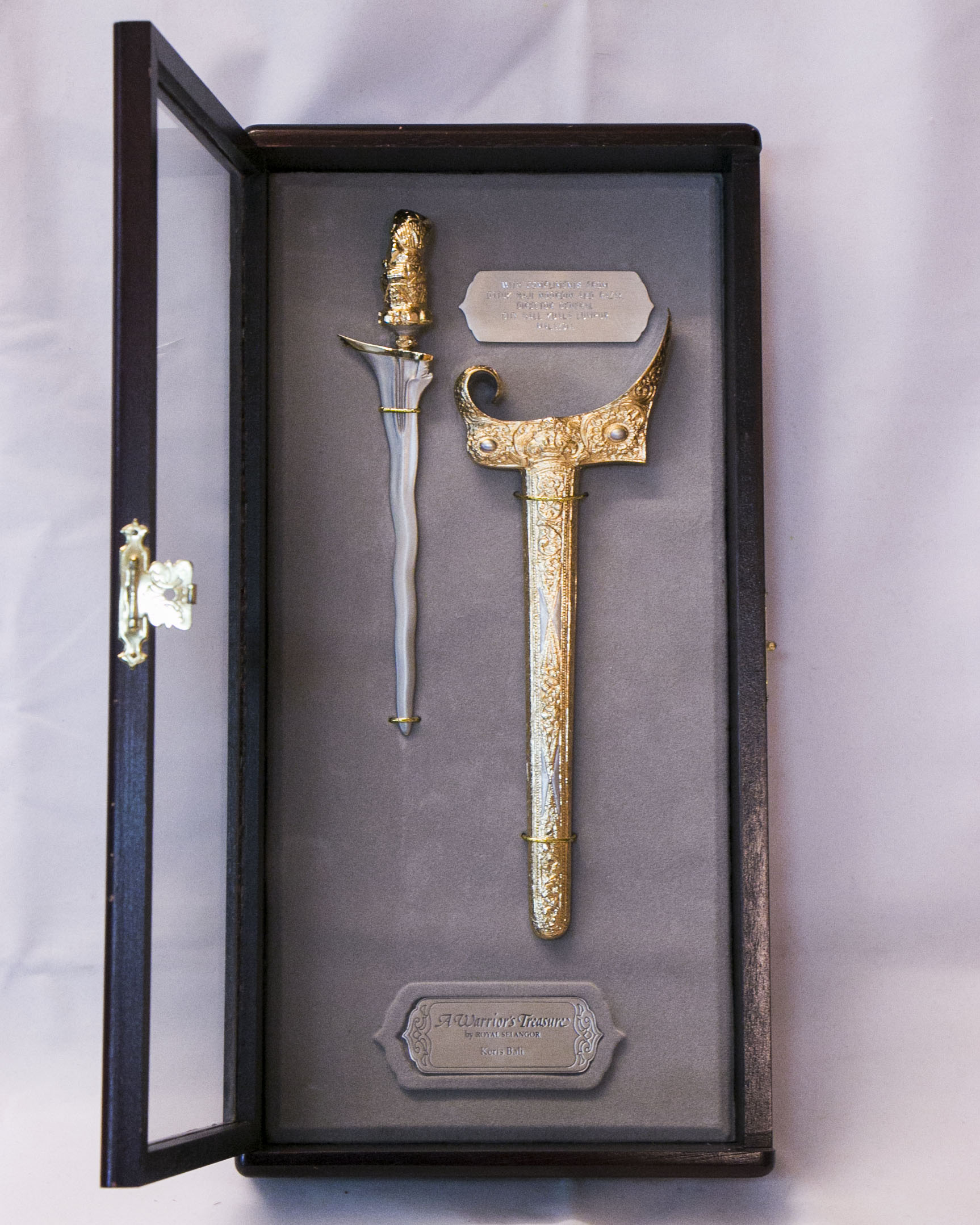
Within the framework of the sister-city agreement between Kuala Lumpur and Isfahan, which was signed on August 18, 1993, one of the ceremonial practices associated with this cultural collaboration was the exchange of symbolic gifts. In this context, the Kuala Lumpur City Administration (likely the Director-General of City Hall—referring to the municipal authority or council) decided to present a ceremonial metal dagger—presumably a Malay kris decorated with gold or gilded elements—to the mayor of Isfahan at the time. This gift symbolized cultural respect, urban brotherhood, and an appreciation of the bond formed between the two cities.
The ceremonial dagger appears to be a kris (also spelled keris or kris), a weapon with a deeply rooted history in the maritime regions of Southeast Asia, including Malaysia. The kris is an asymmetrical or sometimes wavy-bladed dagger that originated on the island of Java in Indonesia and later spread to Malaysia, southern Thailand, and other neighboring regions.
In Malaysia, this dagger is regarded not merely as a weapon but as a powerful emblem of identity, authority, loyalty, ceremony, and the art of metalcraft. The crafting of a kris traditionally carries both artistic and spiritual significance. Its distinctive features include the wavy blade pattern (luk), intricate carvings on the sheath, handcrafted metalwork, and at times, adornments of gold or silver.
Over time, the kris became a part of ceremonial attire, a prestigious gift, a symbol of sovereignty, and a diplomatic offering. For example, it is said that in Malaysia, when a new king is appointed, he kisses a ceremonial kris as a formal gesture marking the beginning of his reign.
Thus, presenting such a dagger serves as a meaningful expression of respect, cultural cooperation, intercity friendship, and recognition of the sister-city relationship.
خنجر تشریفات فلزی
در چارچوب قرارداد خواهرخواندگی بین کوالالامپور و اصفهان که در ۱۸ اوت ۱۹۹۳ به امضا رسید، یکی از آیینهای مربوط به این همکاری فرهنگی، تبادل هدیهٔ نمادین بوده است. در این راستا، فرمانداری شهری کوالالامپور (احتمالاً مدیرکل سالن شهر – که ممکن است به «سالن شهر» در معنای شهرداری یا شورا اشاره داشته باشد) تصمیم گرفت تا یک خنجر تشریفاتی فلزی (احتمالاً از نوع کریسِ مالایی تزئینشده با فلز طلا یا آبطلا) را به شهردار وقت شهر اصفهان هدیه دهد. این هدیه نمادی از احترام فرهنگی، پیوند برادری شهری و ارج نهادن به پیوند بین دو شهر بود.
این خنجر تشریفاتی به نظر میرسد از نوع «کریس» گاهی نوشته شده “keris” یا “kris” باشد. این نوع خنجر در منطقه ی دریایی جنوب شرقی آسیا (از جمله مالزی) دارای سابقه بسیار غنی است.
کریس/کرِس یک خنجر نامتقارن یا گاهی موجدار است که ابتدا در جزیره جاوه (اندونزی) پدید آمد و سپس به مالزی، جنوب تایلند و سایر مناطق پراکنده شد.
در مالزی، این خنجر نه صرفاً بهعنوان سلاح بلکه قطعاً بهعنوان نمادی از هویت، مقام، وفاداری، تشریفات و هنر فلزکاری شناخته میشود.
ساخت آن معمولاً دارای جنبه ی هنری و روحانی بوده است. برای مثال، الگوی موجدار تیغه (luk) و طرحهای پیچیده روی غلاف، دستکَند بودن فلزکاری و گاهی تزئین با طلا یا نقره از ویژگیهای شاخص هستند.
بعدها استفاده آن به عنوان بخشی از لباس تشریفاتی، هدیههای ویژه، نماد اقتدار یا هدایای دیپلماتیک رفته است. بهعنوان مثال، گفته شده است در مالزی، وقتی پادشاه جدید منصوب میشود، کریسی تشریفاتی را میبوسد و این نشاندهندهٔ آغاز رسمی مسئولیت اوست.
بنابراین، هدیه دادن چنین خنجری میتواند حامل پیام احترام، همکاری فرهنگی، دوستی بین شهرها و تقدیر از رابطه خواهرخواندگی باشد.