
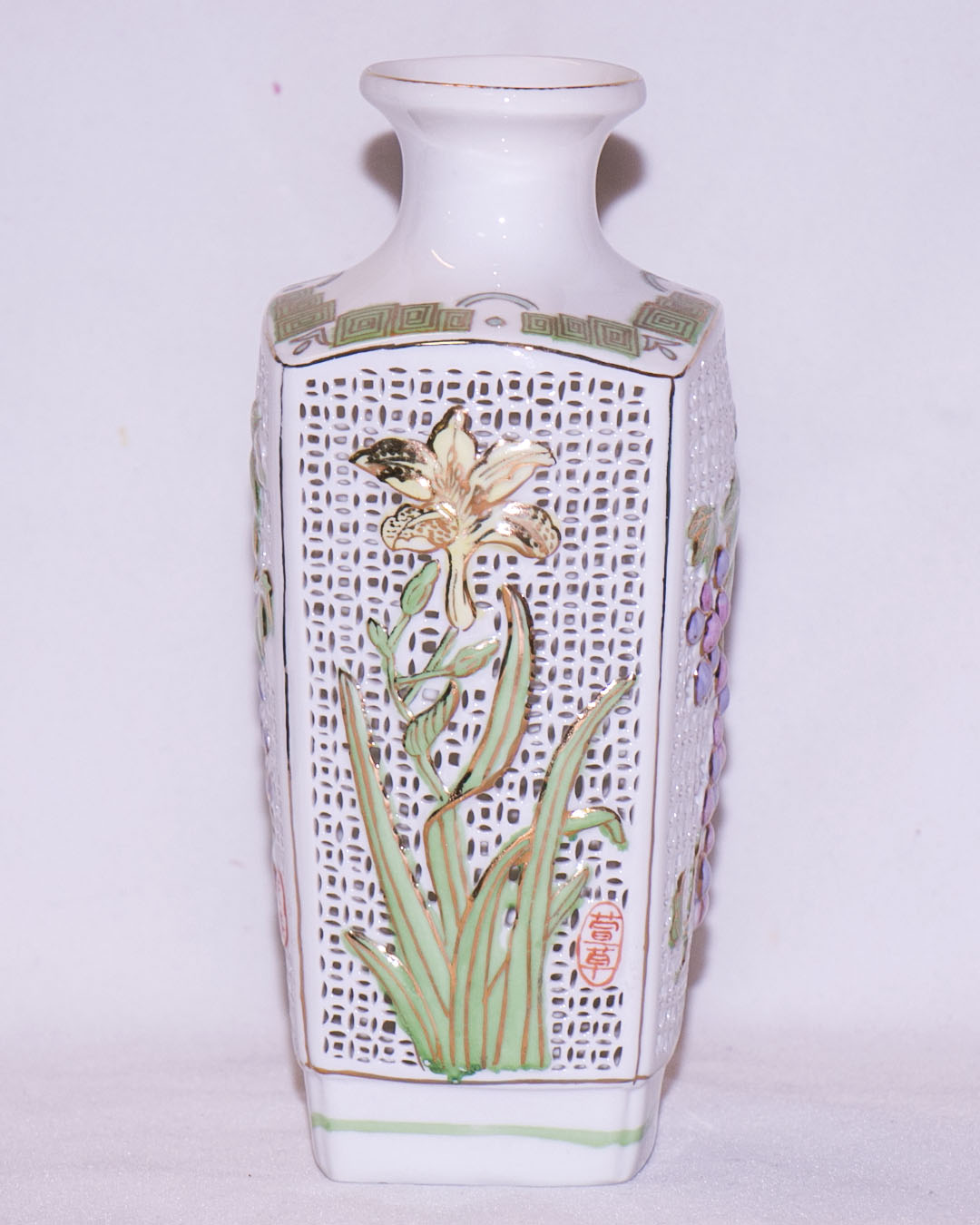
This is an open-work Chinese porcelain vase that was presented as a diplomatic gift by the Ambassador of China to the then Mayor of Isfahan. The gift was offered on the occasion of the sister-city relationship established between Isfahan and Xi’an.
Although the exact date and the specific officials involved in the exchange require further archival confirmation, the sister-city agreement between the two cities was formally concluded in 1989.
The vase represents a refined example of Chinese open-work porcelain, a tradition rooted in centuries of ceramic craftsmanship. Chinese porcelain—developed through the use of kaolin, high-temperature firing, and intricate glazing techniques—became globally renowned from the Tang and Song dynasties onward, flourishing during the Yuan, Ming, and Qing periods.
Open-work (lattice) decoration, seen here in the perforated body of the vase, reflects an advanced decorative technique in which sections of the ceramic surface are carved away to create patterns of light, texture, and shadow. This craftsmanship, often associated with the porcelain workshops of Jingdezhen, is characteristic of high-quality ceremonial and diplomatic objects.
گلدان چینی مشبک
شهر اصفهان یکی از نخستین شهرهای ایران است که دارای پیمان «شهرهای خواهر/شهرهای دوستی» شده است. طبق یکی از منابع، این شهر در تاریخ ۷ می ۱۹۸۹ با شهر شیان (Xi’an) چین پیمان خواهرخواندگی امضا کرده است.
تولید چینی (porcelain) از حدود سدههای میانی (Tang, Song) در چین رایج شده و در دورههای بعد، مخصوصاً سدههای Yuan، Ming، Qing به اوج رسیده است.
در خصوص «مشبککاری» یا open-work در سرامیک: یکی از تکنیکهایی است که در آن بدنه ظرف با سوراخهای منظم یا طرحهای مشبک تزئینی از بدنه جدا شده تا اهمیت بصری پیدا کند.
درباره هنر مشبککاری یا lattice/open-work مخصوص «ظروف چینی» در منابع عمومی، اطلاعات مختصر است ولی چنین طرحهایی در تولیدات لوکس، تزئینی یا نمایشی وجود داشتهاند.