
The city of Isfahan in Iran and the city of Kazan in Russia (the Republic of Tatarstan) signed a sister-city agreement on March 29, 2026 (corresponding to April 9, 2025).
This agreement was signed between the mayor of Kazan, Ilsur Metshin, and the mayor of Isfahan, Ali Ghasemzadeh (written in Persian as “علی قاسمزاده / قاسمزاده”).
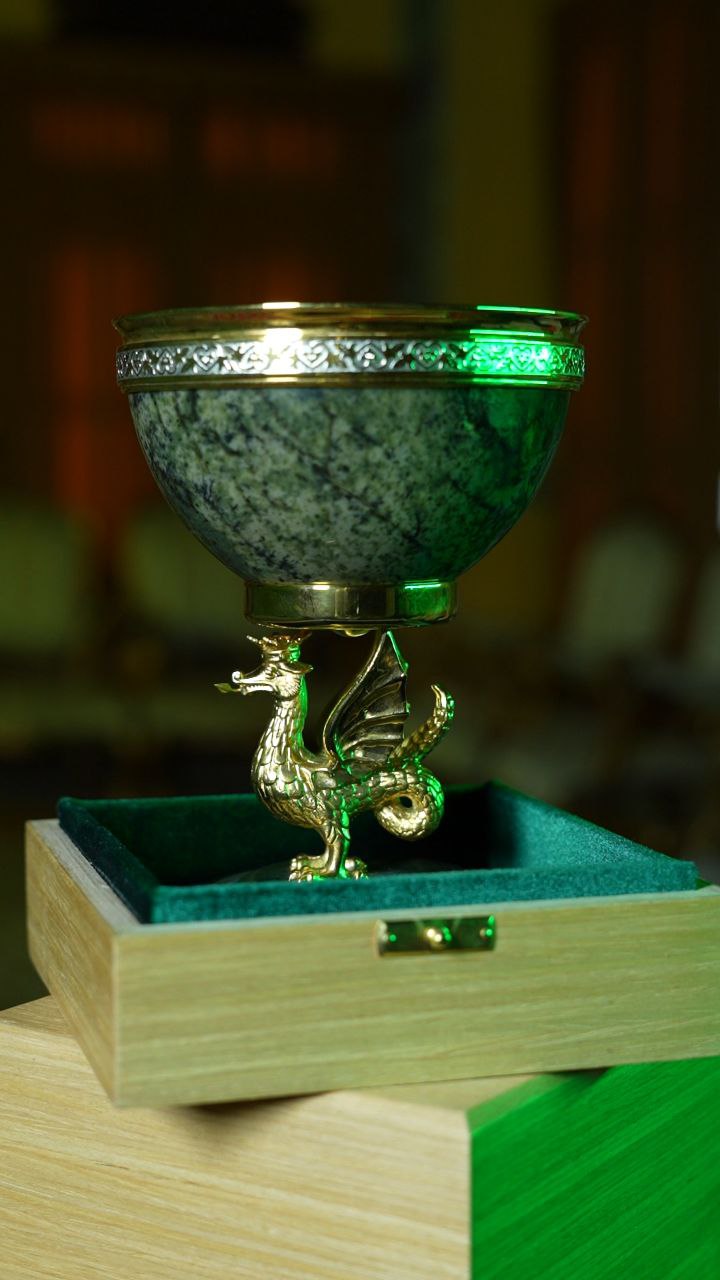
In Russian art, there is a type of vessel known as the Kovsh: originally made of wood, later crafted from metal, and by the 19th century used decoratively and as a ceremonial gift.
Another example is the Bratina, a communal drinking bowl or large silver cup, which was used during gatherings; its distinctive form appeared in the 17th century in metalwork.
The reason such vessels were used as gifts and for official occasions is that they symbolized mastery in metalworking or stone carving, the value of silver, gemstones, or carved stone, and conveyed social prestige. During the Russian imperial era in particular, luxurious vessels were crafted specifically for official or ceremonial gifting.
جام سنگی کازان
شهر اصفهان در ایران و شهر کازان در روسیه (جمهوری تَتارِستان) در تاریخ ۹ فروردین ۱۴۰۴ شمسی (مطابق با ۹ آوریل ۲۰۲۵ میلادی) پیمان خواهرخواندگی منعقد کردند.
این پیمان بین شهردار کازان Ilsur Metshin و شهردار اصفهان Ali Ghasemzadeh (یا به صورت فارسی «علی قاسمزاده / قاسمزاده» ذکر شده) به امضا رسید.
در هنر روسیه، نوعی ظرف به نام Kovsh وجود دارد: این ظرف نخست از چوب ساخته میشد، بعدها از فلز، و در قرن نوزدهم بهصورت تزئینی و برای هدایا به کار میرفت.
مثال دیگر، ظرف نوشیدن «براتینا» (Bratina) است: یک جام یا بشقاب بزرگ نقرهای، معمولاً به شکل مشترک برای جمع میهمانیها به کار میرفته است، اما قالب آن در قرن هفدهم برای تزئینات فلزی دیده شده است.
دلیل استفاده از چنین ظروفی برای هدیه و مناسبتهای رسمی این است که آنها نمایانگر مهارت فلزکاری یا سنگکاری، ارزش الماس/نقره/سنگهای قیمتی و جایگاه اجتماعی بودند. بهویژه در دوره تزاری روسیه، ظروف نفیس برای هدیههای رسمی یا تشریفاتی تهیه میشدند.