
The cities of Isfahan in Iran and Xi’an in China have maintained a long-standing “sister city” relationship. According to available sources, the sister-city agreement between the two was officially signed on May 7, 1989 (corresponding to 17 Ordibehesht 1368 in the Iranian calendar).
The art of painting on silk or silk fabric in China has a very ancient history, with its earliest roots tracing back to the Warring States Period (476–221 BCE). One article notes: “For thousands of years, silk painting has played a significant role in the visual history of China… this art form interweaves two of China’s most distinguished traditions—silk weaving and brush painting.”
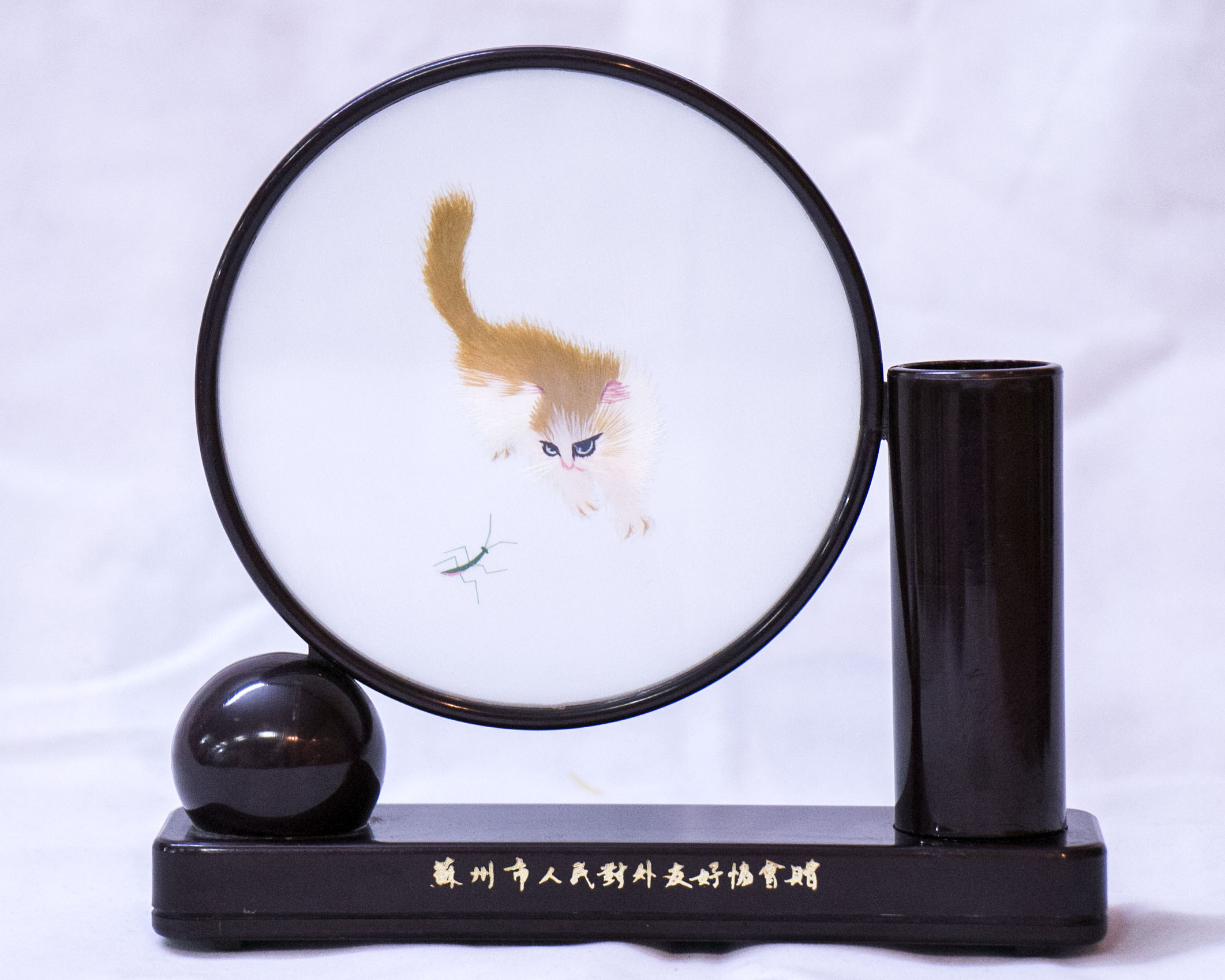
One of the common traditional formats for presenting such artworks was the pingfeng screen, a standing frame or panel on which painted or embroidered silk was mounted and displayed inside homes or workplaces.
Regarding the depiction of cats, it has been noted that cats were highly popular during the Song Dynasty (960–1279 CE) and frequently appeared in Chinese poetry, painting, and proverbs.
جاقلمی چین
شهر اصفهان در ایران و شهر شیآن (Xi’an) در چین از دوران نسبتا طولانی روابط «شهر خواهر / خواهرخوانده» دارند. بر اساس منابع، توافق خواهرخواندگی این دو شهر در ۷ می ۱۳۶۸ خورشیدی / ۷ مه ۱۹۸۹ میلادی به امضا رسیده است.
هنر نقاشی روی ابریشم یا روی پارچه ابریشمی در چین، سابقه بسیار دیرینه دارد. جوانههای آن به دوره «دوران ایالتها / جنگ ایالتها» (۴۷۶-۲۲۱ ق م) برمیگردد.
در مقالهای آمده است: «برای هزاران سال هنر نقاشی ابریشم به شکل مهمی در تاریخ بصری چین نقش داشته است … این هنر دو سنت برجسته چین، یعنی بافت ابریشم و قلممو نقاشی، را با هم گره میزند.
یکی از قالبهای رایج نمایش چنین هنرهایی، صفحه یا مانیتور دَرِ پایِ (screen) یا «پَرده» بود — یعنی سطحی که نقاشی یا گلدوزی بر آن نصب میشد و در داخل خانه یا محل کار قرار میگرفت.
در رابطه با تصویر گربه، اشاره شده است که «گربهها در دوره سلسله سونگ (۹۶۰-۱۲۷۹) محبوب بودند و در شعر، نقاشی و ضربالمثلهای چین حضور داشتند.